




What's Happening?
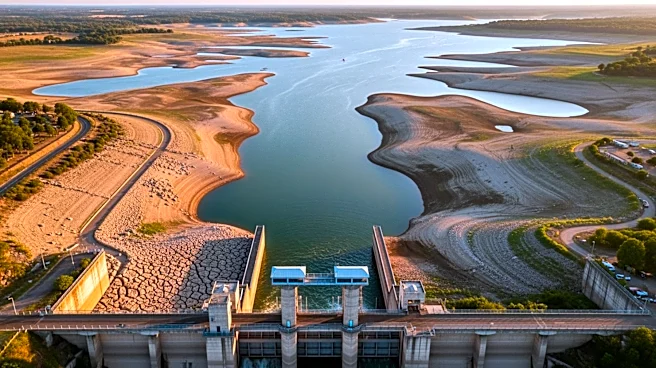
The Bureau of Reclamation has announced emergency measures to address the severe drought affecting the Colorado River Basin. The agency plans to release between 600,000 and one million acre-feet of water from the Flaming Gorge Reservoir over the next
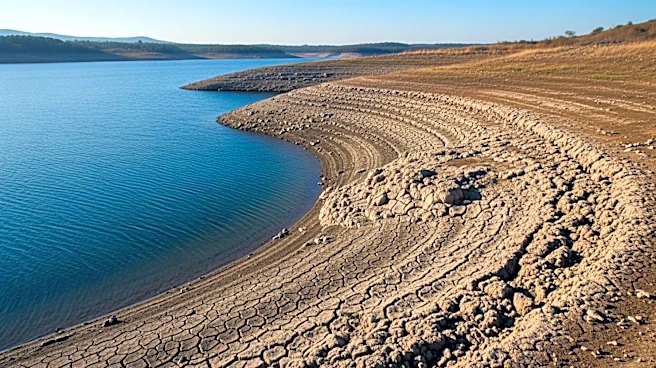
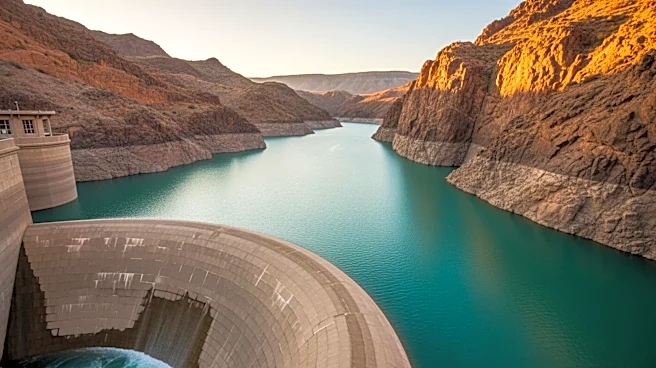
year. Additionally, the water flow from Lake Powell through the Glen Canyon Dam will be reduced, decreasing the downstream flow to Lake Mead. This decision comes in response to record-low snowpack levels, which have significantly reduced the expected runoff into Lake Powell. The current elevation of Lake Powell is approximately 3,528 feet, and the planned actions aim to raise it by 54 feet by April 2027. However, if the elevation drops below 3,490 feet, hydropower production at Glen Canyon Dam will be compromised. The measures are intended to protect the reservoir's infrastructure and manage water resources amid ongoing drought conditions.
Why It's Important?
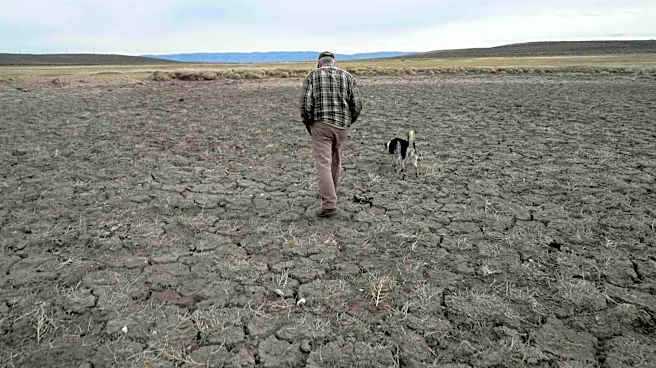
The actions taken by the Bureau of Reclamation are crucial for maintaining water supply and hydropower generation in the Colorado River Basin, which supports millions of people and vast agricultural areas. The reduced water flow from Lake Powell could lead to legal disputes between Upper and Lower Basin states over water allocation, potentially escalating to the U.S. Supreme Court. The drought has already prompted Arizona to consider legal action. Furthermore, the reduced water availability could exacerbate wildfire risks and impact agricultural and recreational activities, affecting local economies and communities dependent on these resources.
What's Next?
The Bureau of Reclamation's plan will be closely monitored to assess its effectiveness in stabilizing water levels in Lake Powell. Stakeholders, including state governments and environmental groups, may engage in negotiations to address long-term water management strategies. The potential for legal challenges remains high, particularly if the water levels continue to decline. The situation underscores the need for collaborative efforts to develop sustainable water usage policies in the face of climate change and increasing demand.
Beyond the Headlines
The ongoing drought highlights the broader challenges of water management in the Western United States, where climate change is altering precipitation patterns and increasing the frequency of extreme weather events. The reliance on snowmelt for water supply is becoming increasingly precarious, necessitating innovative approaches to water conservation and infrastructure adaptation. The situation also raises ethical questions about resource allocation and the responsibility of different states and sectors to reduce water consumption.