
What's Happening?
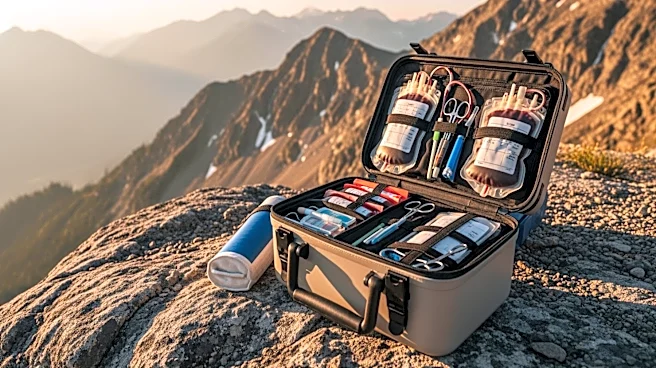
Emergency medical services in the Mountain West region, including Colorado, Idaho, Utah, and Nevada, have begun administering whole blood transfusions at the scene of accidents. This initiative, led by
the Colorado Whole Blood Coalition, aims to stabilize trauma patients before they reach the hospital. Jill Ridenhour, a field supervisor at Summit Fire and EMS, recently administered whole blood to a trauma patient, resulting in improved blood pressure and stabilization. The use of whole blood, which retains all components like plasma and platelets, is seen as a revolutionary approach compared to traditional saline fluids. Historically used in military settings, whole blood transfusions have shown a 37% reduction in mortality for trauma patients when administered pre-hospital. The program is expanding, with 15 agencies in the region adopting the practice in the past two years.
Why It's Important?
The implementation of on-scene blood transfusions represents a significant advancement in emergency medical care, potentially saving lives by providing critical treatment during the crucial window before hospital arrival. This approach addresses the high mortality rate in trauma cases, particularly in car accidents, where over 40% of fatalities occur before hospital admission. By stabilizing patients earlier, emergency responders can improve survival rates and outcomes. The federal government has recognized the importance of this initiative, allocating $80 million to support pre-hospital blood programs. This funding underscores the potential of whole blood transfusions to become a standard practice in trauma care, enhancing the capabilities of emergency medical services across the U.S.
What's Next?
The Colorado Whole Blood Coalition and other agencies are working to expand the availability of whole blood transfusions, with plans to increase the number of participating EMS agencies. Maintaining a steady supply of fresh blood is a logistical challenge, requiring daily management and partnerships with hospitals to prevent waste. The federal investment in pre-hospital blood programs is expected to facilitate further adoption and integration into standard trauma protocols. As more data becomes available, the success of these programs could lead to nationwide implementation, setting a new standard for emergency medical response.