
What's Happening?
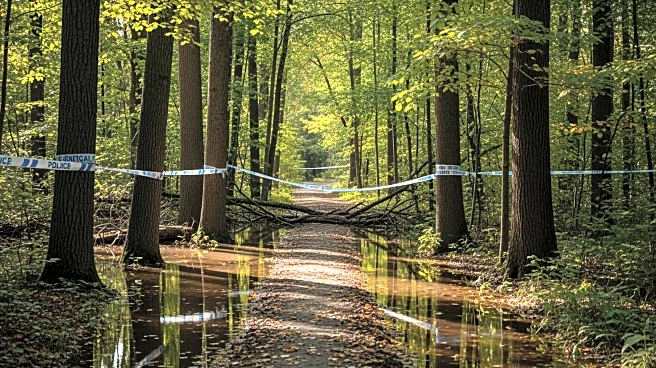
A 67-kilometer section of the Kettle Valley Rail Trail near Princeton, British Columbia, will be decommissioned following extensive damage from flooding in 2021. The trail, part of the Trans-Canada Trail system,
suffered significant erosion and structural damage during an atmospheric river event. The decommissioning process, expected to cost $20 million, will be funded primarily through the federal Disaster Financial Assistance Arrangements program. The decision to deactivate the trail was made due to the high cost of repairs, estimated at $60 million, and concerns about environmental sustainability. The decommissioning will occur in phases over the next few years, with an alternate route available for trail users.
Why It's Important?
The deactivation of this trail segment highlights the challenges of maintaining infrastructure in the face of extreme weather events, which are becoming more frequent due to climate change. The decision has significant implications for the local community, affecting tourism, recreation, and cultural activities. The trail is a vital part of the region's outdoor economy, and its closure could lead to economic losses for businesses that rely on trail-related tourism. The situation underscores the need for investment in resilient infrastructure and sustainable solutions to mitigate the impacts of climate change on public assets.
What's Next?
The decommissioning process will begin in the spring and is expected to take two to three years. Local officials, including the Mayor of Princeton, have expressed disappointment and are calling for discussions with provincial authorities to explore alternative solutions. The community may seek additional funding or support to preserve the trail's benefits. The broader implications of this decision may prompt further discussions on infrastructure resilience and climate adaptation strategies at the provincial and national levels.