









What's Happening?
The Internal Revenue Service (IRS) has clarified the deadlines for claiming federal stimulus payments, also known as Economic Impact Payments (EIPs). The deadline to claim the 2020 stimulus payment, which covered the first two rounds of payments, expired
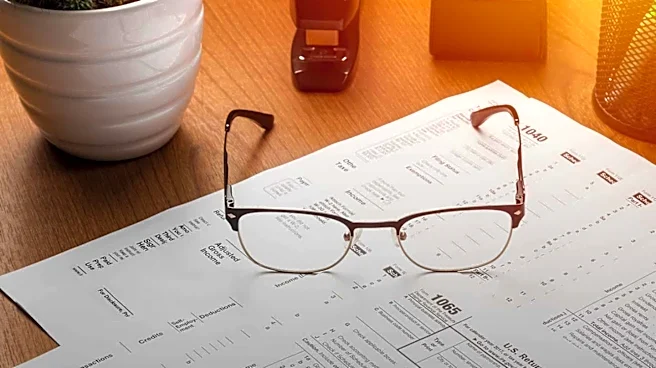
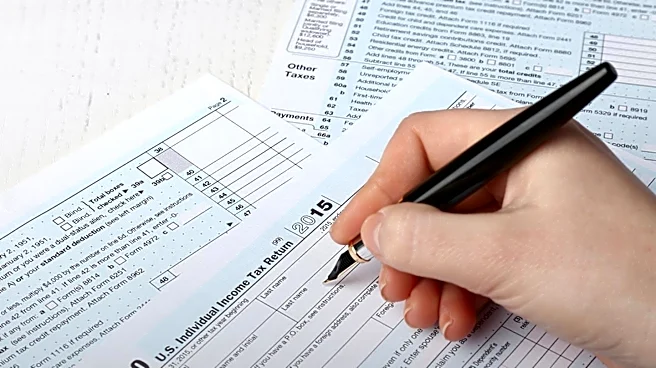
in May 2024. For the third stimulus payment issued in 2021, the deadline for most filers was April 2025. While these dates mean the window has largely closed for many, a narrow group of non-filers may still have an opportunity to claim the 2021 stimulus payment. The only official method for recovering missed stimulus payments is through the Recovery Rebate Credit, which must be claimed on a Form 1040. The IRS emphasizes that it will not automatically correct missed payments, and individuals are responsible for accurately calculating and claiming the credit. Billions of dollars in federal stimulus payments remain unclaimed, with reasons ranging from individuals earning below filing thresholds to changes in address or bank accounts.
Why It's Important?
The clarification of stimulus payment deadlines is crucial for individuals who may have been eligible for these funds but did not receive them. The existence of billions in unclaimed stimulus money highlights a significant gap in the distribution process, often affecting vulnerable populations such as non-filers and low-income households. These groups frequently interact less with financial and government systems, leading to missed payments and a lack of awareness regarding recovery options. The Recovery Rebate Credit serves as a critical mechanism for these individuals to access funds intended to provide economic relief. The ongoing availability of this credit for a specific subset of non-filers for the 2021 payment underscores the government's intent to ensure eligible citizens receive their due, even if past deadlines have passed for the majority. This situation also points to broader issues of financial literacy and access to information within certain demographics.
What's Next?
Individuals who believe they are owed a stimulus payment should first check their IRS Online Account to verify what payments the IRS shows as issued. This is the most reliable source for payment history. If a payment was issued but not received due to issues like a lost check or a closed bank account, the IRS has specific trace and reissuance workflows, which can be initiated using Form 3911. For those who qualify for the Recovery Rebate Credit, particularly the narrow group of non-filers for the 2021 payment, the next step involves accurately completing the Recovery Rebate Credit Worksheet in the Form 1040 instructions and entering the calculated figure on Line 30 of Form 1040 or Form 1040-SR. If a return was already filed without claiming the credit, an amended return (Form 1040-X) can be submitted. Processing times for refunds generally vary, with electronic filings typically processed within 21 days.
Beyond the Headlines
The issue of unclaimed stimulus payments extends beyond immediate financial relief, revealing systemic challenges in connecting government aid with eligible recipients. The pattern of missed payments among non-filers and low-income households suggests a broader 'structural blind spot' where these groups are also likely to have unclaimed state property or be eligible for class action settlements. This indicates a need for more proactive outreach and simplified processes to ensure that those who need assistance the most are not left behind due to administrative complexities or lack of awareness. The legal framework, such as I.R.C. § 6511, which sets strict deadlines, highlights the tension between administrative efficiency and equitable access. While court decisions like Kwong v. United States can carve out exceptions for specific subgroups, they also underscore the complexity of navigating these systems without professional guidance, further disadvantaging those with limited resources.