









What's Happening?
NATO Secretary General Mark Rutte recently outlined his perspective on developing drone capabilities within the alliance, emphasizing the need for production capacity over stockpiling drones. Rutte argued that it is impractical to fill shelves with drones for future
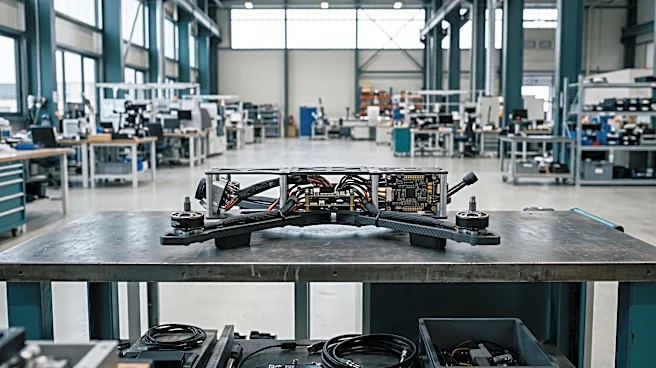
conflicts due to rapid technological obsolescence. Instead, he advocates for establishing robust production capabilities that can manufacture the latest technology as needed. While acknowledging the validity of not storing millions of outdated drones, the article highlights that building a functional drone capability requires more than just production lines. It necessitates units having equipment for continuous training and development, and industry needing to manufacture, deliver, and improve systems to scale up production effectively. NATO plans to train five times as many drone operators by the end of 2027, a move that requires a procurement model ensuring ongoing access to equipment for these operators. The discussion also touches upon Ukraine's 'Drone Line' initiative, which focuses on integrating proven solutions and systematically using unmanned systems, prioritizing effective and reliable systems based on real-world data.
Why It's Important?
This discussion is crucial for U.S. defense strategy and its role within NATO, as it addresses the evolving nature of modern warfare, particularly the increasing reliance on drone technology. The U.S. military, like other NATO members, faces the challenge of balancing rapid technological advancements with practical procurement and training needs. Rutte's emphasis on production capacity over stockpiling could influence future U.S. defense spending and industrial policy, potentially shifting focus towards agile manufacturing and continuous innovation in the defense sector. This approach aims to ensure that NATO forces, including U.S. contingents, are equipped with the most current drone technology, rather than being reliant on potentially obsolete systems. The integration of lessons from Ukraine's drone warfare, such as prioritizing systems based on actual battlefield effectiveness, could also shape U.S. military doctrine and procurement strategies, fostering closer collaboration between military units, developers, and industry to drive innovation and maintain a technological edge.
What's Next?
Following Secretary General Rutte's statements, NATO is expected to further refine its drone procurement and training strategies. The alliance's commitment to training five times more drone operators by the end of 2027 will necessitate significant investment in training infrastructure and equipment. This will likely lead to new procurement models that ensure continuous access to drones for training and operational development. Member states, including the U.S., may re-evaluate their own defense industrial bases to align with NATO's emphasis on scalable production capacity rather than large-scale stockpiling. There could be increased collaboration between military units and defense contractors to develop and rapidly deploy new drone technologies, drawing inspiration from Ukraine's 'Drone Line' initiative. This could involve more agile development cycles and a greater focus on integrating battlefield feedback into drone design and production. The ongoing adaptation of NATO's 'Fight Tonight' principle to include rapid technological development in drone capabilities will be a key area of focus.
Beyond the Headlines
The debate over drone procurement highlights a deeper shift in military-industrial paradigms, moving away from traditional long-term procurement cycles towards a more dynamic, software-like development model. The concept of 'Drone-as-a-Service,' proposed by Sweden Dynamics, suggests a future where hardware, software, and user experience are integrated into ongoing capability development, similar to how civilian tech industries operate. This model could lead to ethical considerations regarding the rapid deployment of new, potentially less tested, drone technologies and their impact on the rules of engagement. Legally, the continuous evolution of drone capabilities might necessitate updates to international laws governing armed conflict, particularly concerning autonomous weapons systems. Culturally, this shift could foster a closer relationship between military personnel and tech developers, blurring traditional lines between defense and civilian innovation. The long-term implication is a defense ecosystem that prioritizes adaptability and continuous improvement, potentially reducing the lifespan of military hardware and increasing the demand for skilled technical personnel.