







What's Happening?
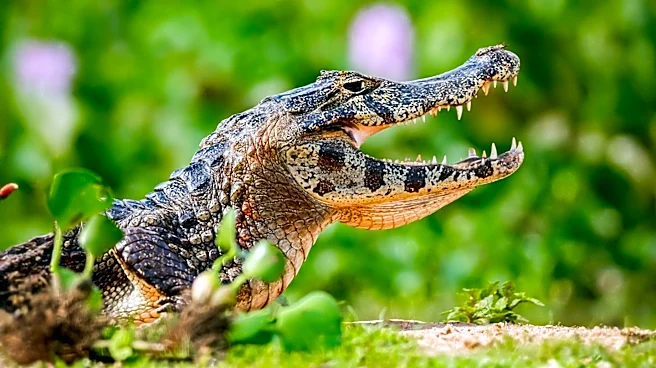
The Everglades ecosystem in Florida is facing a new threat from the spectacled caiman, a non-native reptile species originally from Central and South America. These caimans, which can grow up to 8 feet long, were introduced to Florida over 60 years ago
through the exotic pet trade. As they have established themselves in the wetlands, they pose a significant threat to native species, including crocodiles and alligators, by competing for food and territory. The spectacled caiman's indiscriminate diet includes insects, fish, reptiles, birds, and mammals, which could destabilize the local food web. Efforts to manage and contain the caiman population have been ongoing, with over 340 individuals removed since 2017.
Why It's Important?
The presence of the spectacled caiman in the Everglades highlights the broader issue of invasive species and their impact on native ecosystems. Invasive species can disrupt ecological balance, leading to the decline or extinction of native species and altering habitats. The spectacled caiman's competition with native crocodilians for resources could have long-term consequences for the biodiversity and health of the Everglades. This situation underscores the importance of effective management and monitoring of invasive species to protect vulnerable ecosystems. The ongoing efforts to control the caiman population are crucial to preserving the ecological integrity of the Everglades, a unique and vital habitat in the United States.
What's Next?
Continued research and monitoring are essential to managing the spectacled caiman population in Florida. Scientists and conservationists are calling for increased efforts to track and control these invasive reptiles to prevent further ecological damage. The potential interbreeding of genetically distinct caiman populations could increase their resilience, making management efforts more challenging. Authorities may need to implement more aggressive measures to prevent the spread of caimans and protect native species. Public awareness and education about the impact of releasing exotic pets into the wild could also play a role in preventing future invasions.