


What's Happening?
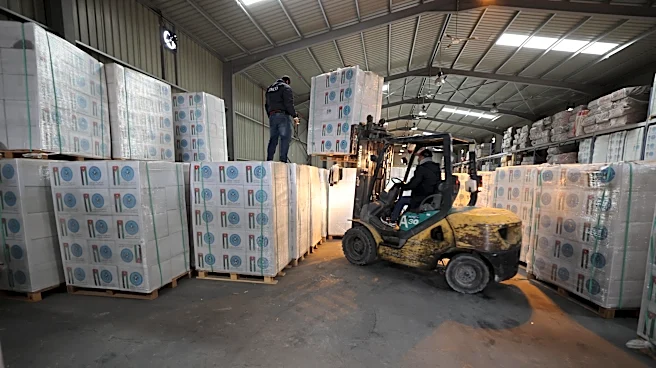
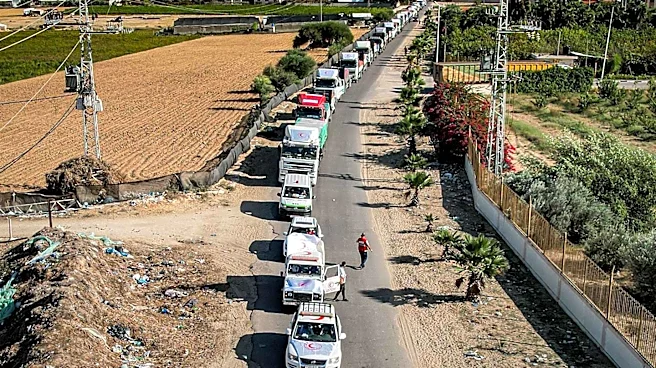
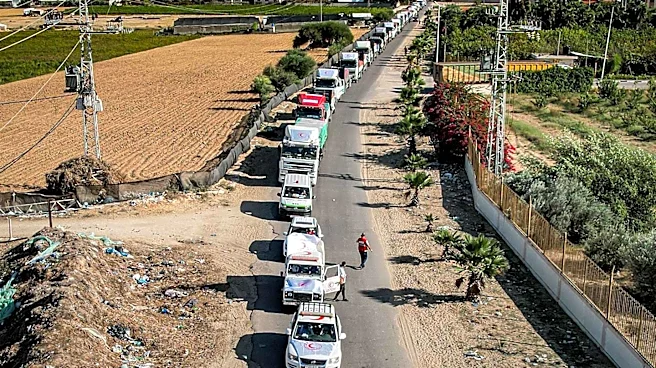
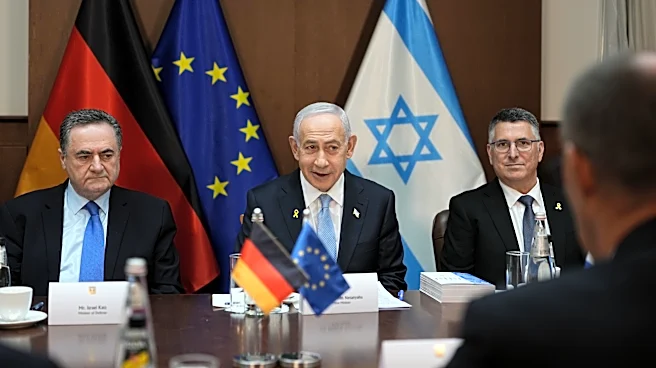
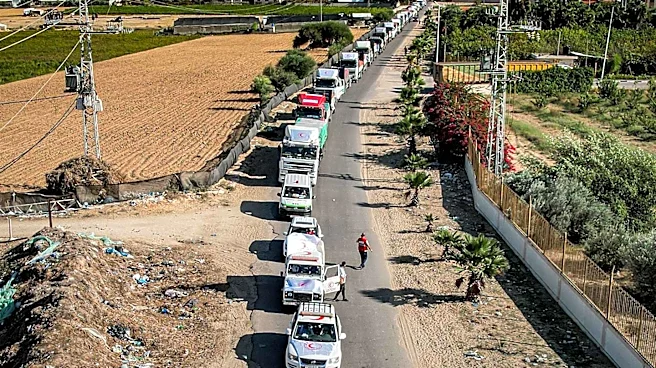
The foreign ministers of Australia, Canada, Italy, and Britain have issued a joint statement urging Israel to permit 'immediate, rapid and unimpeded humanitarian access throughout Gaza.' This appeal comes as 150,000 tents and other vital supplies are
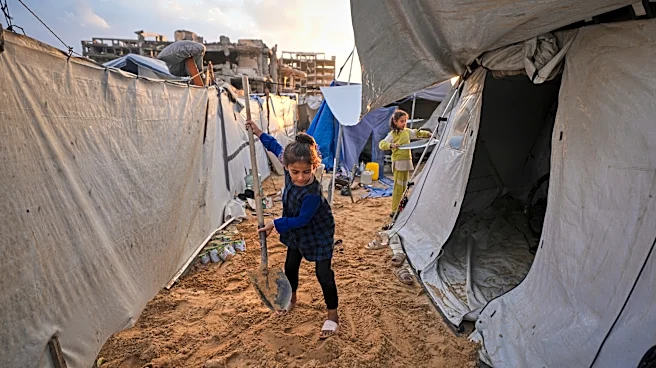
reportedly being held at the border, unable to enter Gaza despite a dire humanitarian situation. Recent floods have exacerbated the suffering, with a nine-month-old baby already succumbing to falling temperatures. The ministers emphasized that the situation is 'entirely reversible' and called for the opening of all available crossings and land routes, including humanitarian corridors through Egypt and Jordan. They also stressed the need for dual-use items necessary for humanitarian operations and early recovery to be granted entry before winter fully sets in.
Why It's Important?
This joint appeal from four significant international actors underscores the escalating humanitarian crisis in Gaza and the urgent need for international intervention. The inability to deliver essential aid, including shelter and medical supplies, directly impacts the lives of millions, particularly vulnerable populations like children, who are now facing the harsh realities of winter. The call for unimpeded access highlights concerns about potential violations of international humanitarian law, which mandates the protection of civilians and the facilitation of humanitarian assistance in conflict zones. The involvement of these nations also signals growing international pressure on Israel to ease restrictions, potentially influencing diplomatic efforts and future policy decisions regarding aid delivery and the overall conflict in the region. Failure to address this crisis could lead to further loss of life and destabilization.
What's Next?
The immediate next step involves Israel's response to the urgent call from the four foreign ministers. The international community will be closely monitoring whether Israel facilitates the entry of the held-up aid and opens additional humanitarian corridors. Further diplomatic pressure may be exerted if the situation does not improve, potentially leading to discussions within international bodies like the UN. European foreign ministers, including Ireland's Helen McEntee, are also advocating for stronger EU statements to push for the opening of corridors. The ongoing humanitarian crisis, particularly with the onset of winter, will likely keep this issue at the forefront of international discussions, potentially influencing broader peace efforts and the dynamics of the conflict.
Beyond the Headlines
The humanitarian crisis in Gaza, exacerbated by restrictions on aid, raises profound questions about the responsibilities of occupying powers and the effectiveness of international humanitarian law in conflict zones. The reported holding of essential supplies at the border, while people suffer from exposure and lack of basic necessities, highlights a critical ethical dilemma. This situation also underscores the complex interplay between security concerns and humanitarian imperatives, where the balance often shifts, leading to severe consequences for civilian populations. The long-term implications include potential radicalization due to prolonged suffering, increased regional instability, and a erosion of trust in international institutions' ability to protect vulnerable populations. The call for 'dual-use items' also points to the challenges of distinguishing between civilian and military goods in a conflict setting, a common hurdle in humanitarian aid delivery.