





What's Happening?
The National Weather Service's (NWS) Climate Prediction Center announced a 60% chance that the current El Niño event will be record-breaking, surpassing any in the past 75 years. This climate phenomenon, characterized by a periodic warming of the tropical
Pacific Ocean, is intensifying, with ocean temperatures continuing to rise, according to the National Oceanic and Atmospheric Administration (NOAA). The NWS indicated that there is a greater than 79% chance of a strong or very strong El Niño persisting through January-March 2027. Forecasters classify an El Niño as 'very strong' when temperatures in the key Niño-3.4 region of the Pacific are at least 2°C above average over a three-month period; this region is currently about 2.5°C above average. This strengthening El Niño is expected to bring extreme weather globally, including drought in some areas and heavy rain and flooding in others. The impacts are already being felt worldwide, with projections of increased heat-related deaths and ongoing droughts in regions like South and Southeast Asia.
Why It's Important?
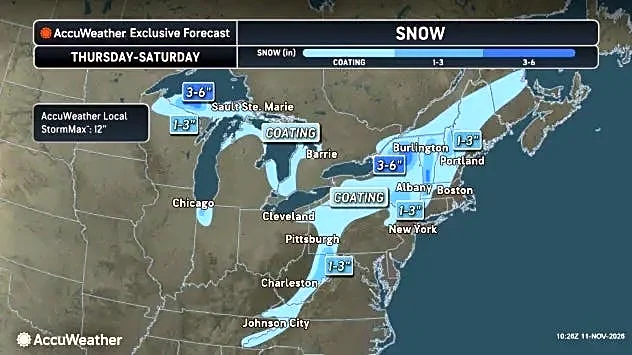
This potentially historic El Niño carries significant implications for the United States, primarily by altering typical winter weather patterns. NOAA's winter outlook suggests warmer-than-average temperatures across much of the northern U.S., including the Pacific Northwest, northern Plains, Midwest, and much of the East. Conversely, wetter-than-average conditions are favored across California, the Southwest, the central and southern Plains, the Gulf Coast, and the Eastern Seaboard. This shift is expected to alleviate drought conditions in the South and parts of the West, which NOAA has 'high confidence' in. However, the increased rainfall on dry soil also raises the risk of destructive flash floods and mudslides, particularly in areas like the eastern Gulf Coast and northern Florida. The phenomenon also influences snowfall, with above-average snowfall expected in the mountains of Southern California, parts of Nevada, the southern Rockies, and the southern High Plains, while less is anticipated in the northern Rockies, Great Lakes, and interior Northeast. These changes can impact agriculture, water management, and infrastructure across various U.S. regions.
What's Next?
As the El Niño continues to strengthen, its effects are expected to become more pronounced throughout the winter months. The NWS Climate Prediction Center will continue to monitor ocean temperatures and atmospheric responses, providing updated forecasts. U.S. regions prone to increased rainfall, such as California and the Gulf Coast, will need to prepare for potential flooding and mudslides, while northern states may experience milder winters. Emergency management agencies will likely focus on preparedness for severe weather events, especially in late winter across the eastern Gulf Coast. Farmers and agricultural sectors will need to adapt to altered precipitation and temperature patterns, which could affect crop yields and water availability. The ongoing El Niño will also influence energy demands, with milder northern winters potentially reducing heating costs, while increased precipitation in the south could impact water resource management and flood control efforts. The full extent of the impact on wildlife and marine ecosystems, particularly along the California coast, will become clearer in the spring.
Beyond the Headlines
The strengthening El Niño highlights broader climate trends and the increasing frequency of extreme weather events. Scientists at the University of Chicago's Climate Impact Lab project significant global mortality from the additional heat, underscoring the human cost of such climate phenomena. The event serves as a 'postcard from the future,' as described by report authors, indicating the potential for more frequent and intense climate-related challenges. The economic implications extend beyond immediate weather impacts, affecting global supply chains, commodity prices, and disaster relief efforts. The UN Development Program's chief noted that early action on El Niño impacts could cost half as much as waiting for its consequences to unfold, emphasizing the importance of proactive climate adaptation strategies. This El Niño also brings into focus the interconnectedness of global climate systems and the need for international cooperation in addressing climate change and its manifestations.