






What's Happening?
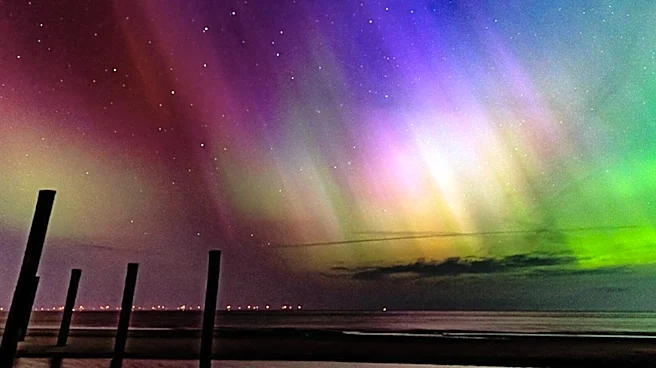
The National Oceanic and Atmospheric Administration's Space Weather Prediction Center has forecasted that the northern lights, or aurora borealis, will be visible across parts of the northern United States and much of Canada from July 31 through August
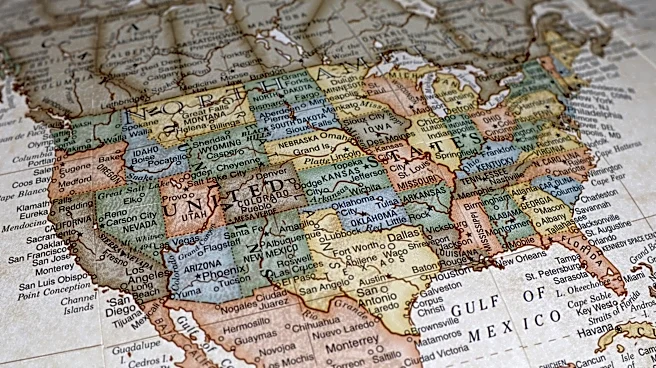
2. This phenomenon occurs when charged solar particles interact with Earth's atmosphere, creating colorful displays of light. The forecast suggests that states such as Alaska, Washington, Idaho, Montana, North Dakota, Minnesota, Wisconsin, and Michigan may experience these celestial displays. The event is driven by a recent solar eruption and a coronal hole, which are expected to enhance auroral activity.
Why It's Important?
The visibility of the northern lights in the U.S. presents a unique opportunity for skywatchers and photographers to witness this natural spectacle. It highlights the ongoing solar activity and its impact on Earth's atmosphere, offering educational insights into space weather phenomena. For local economies, particularly in northern states, this event could attract tourists and boost local businesses catering to visitors seeking optimal viewing experiences. Additionally, it underscores the importance of monitoring space weather, which can have broader implications for satellite operations and communication systems.
What's Next?
Skywatchers are advised to monitor real-time updates from NOAA's aurora forecast to optimize their chances of viewing the northern lights. As the solar cycle progresses, similar events may occur, providing further opportunities for observation and study. Communities in the affected areas might consider organizing events or tours to capitalize on the increased interest in aurora viewing. Researchers will continue to study the effects of solar activity on Earth's atmosphere, contributing to a better understanding of space weather impacts.