





What's Happening?
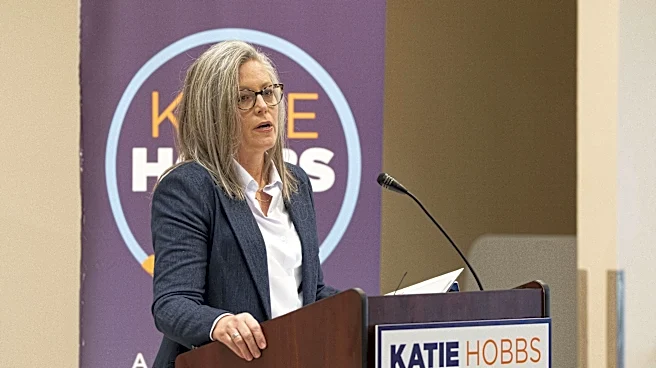
Governor Katie Hobbs has announced that Arizona has officially submitted its application to NASA to become the host state for the proposed U.S. Space Academy. This new institution is envisioned to be a premier training ground for future astronauts, engineers,
and technicians, playing a crucial role in advancing the nation's space exploration capabilities. Arizona's proposal outlines an initial plan to accommodate a class of 300 students at Arizona State University (ASU) in Tempe. For the academy's permanent locations, the state has put forward two sites: Flagstaff and ASU’s Polytechnic campus in Mesa. ASU President Michael Crow has expressed the state's readiness to welcome the inaugural class of students by the year 2028, signaling a strong commitment from Arizona's academic and governmental sectors to this initiative. The establishment of such an academy would significantly bolster Arizona's profile in scientific research and technological development.
Why It's Important?
Arizona's bid to host the U.S. Space Academy carries significant implications for the state's economic development, educational landscape, and national standing in the aerospace industry. Securing the academy would attract substantial federal investment, create numerous high-tech jobs, and foster a robust ecosystem for aerospace innovation within Arizona. The presence of a dedicated space academy would also elevate the state's universities, particularly ASU, by drawing top talent in science, technology, engineering, and mathematics (STEM) fields. This initiative aligns with national priorities to strengthen the U.S. workforce in critical technological areas and maintain leadership in space exploration. For Arizona, it represents an opportunity to diversify its economy beyond traditional sectors and establish itself as a hub for future space-related endeavors, potentially influencing future federal funding and private sector investments in the region.
What's Next?
Following Arizona's submission, NASA will now evaluate proposals from various states vying to host the U.S. Space Academy. The selection process is expected to be rigorous, involving detailed assessments of proposed sites, infrastructure, academic partnerships, and state support. Should Arizona be selected, the next steps would involve significant planning and development phases, including the construction or adaptation of facilities at the chosen permanent locations in Flagstaff or Mesa. ASU would likely play a central role in curriculum development and initial student intake. The timeline suggests that the first class of 300 students could commence training as early as 2028, indicating a relatively swift transition from selection to operational status. The decision from NASA will be a critical determinant for Arizona's future in the national space program.
Beyond the Headlines
The potential establishment of the U.S. Space Academy in Arizona extends beyond immediate economic and educational benefits, touching upon broader societal and cultural impacts. Hosting such a prestigious institution could inspire a new generation of Arizonans and Americans to pursue careers in STEM, fostering a culture of innovation and scientific curiosity. It could also lead to increased public engagement with space exploration and scientific research, potentially influencing educational policies and funding at the state level to support related fields. Furthermore, the academy could become a symbol of national ambition and technological prowess, drawing international attention and potentially fostering collaborations with global space agencies. The long-term implications include solidifying Arizona's reputation as a leader in advanced technology and scientific research, contributing to the nation's strategic interests in space.