







What's Happening?
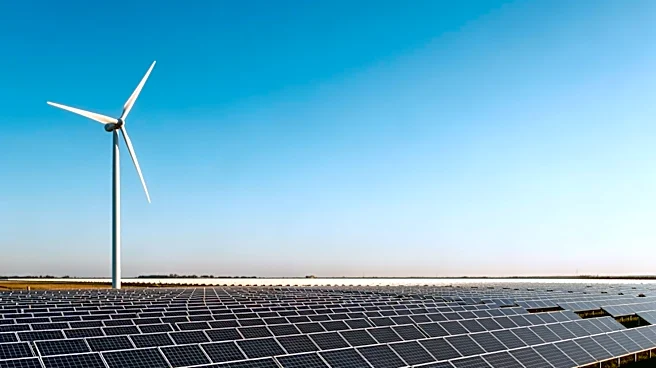
A recent study led by researchers from the University of Massachusetts Amherst has found that large-scale solar energy projects in the United States encounter fewer permitting conflicts than commonly perceived. The study, which analyzed 686 solar facilities
that became operational between January 2022 and November 2023, revealed that 56% of these projects experienced no or low levels of conflict. The research highlights that institutional arrangements and project scale, rather than political composition, are significant factors influencing conflict levels. Larger projects tend to face more conflicts, while state-level permitting systems are associated with lower conflict levels compared to local or hybrid systems.
Why It's Important?
The findings of this study are significant as they challenge the widespread perception of high opposition to solar energy projects, which can influence public policy and investment decisions. Understanding the true nature of conflicts in solar permitting is crucial for policymakers and stakeholders aiming to expand renewable energy capacity. The study suggests that streamlining permitting processes at the state level could facilitate faster energy transitions and enhance democratic participation in energy siting decisions. This could lead to more efficient deployment of solar energy, contributing to the U.S.'s clean energy goals and reducing reliance on fossil fuels.
What's Next?
As the U.S. continues to pursue its renewable energy targets, the insights from this study could inform future policy reforms aimed at reducing conflicts in solar project permitting. Stakeholders may advocate for more state-level permitting processes to minimize conflicts and expedite project approvals. Additionally, the study's findings could encourage further research into the factors driving conflicts in renewable energy projects, potentially leading to more targeted strategies for conflict resolution and community engagement.