
What's Happening?
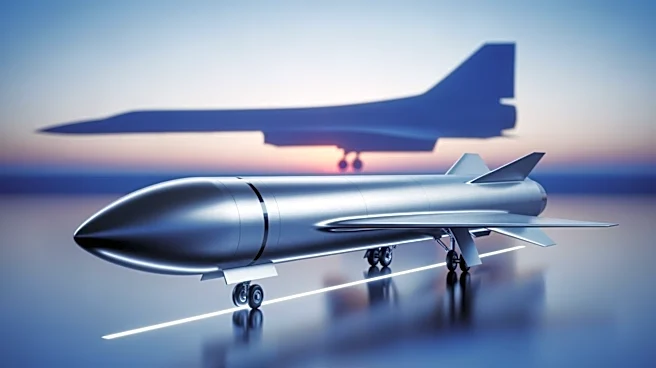
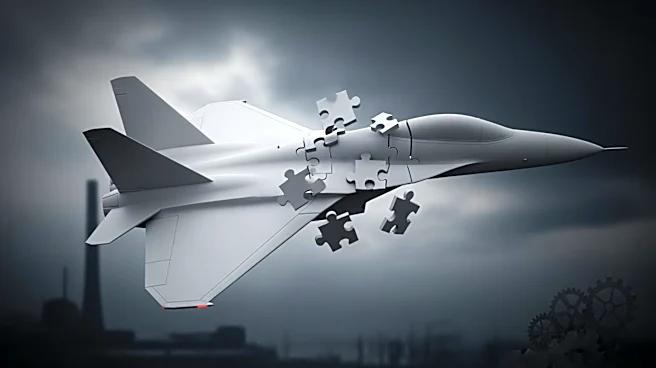
France and Germany have officially abandoned their joint project to develop a European fighter jet, known as the Future Combat Air System (FCAS). This decision follows prolonged disagreements between the key
industrial partners, Dassault Aviation and Airbus, over leadership and control of the project. Initiated in 2017, the FCAS was intended to replace existing fighter jets by 2040. However, the project has been plagued by disputes over intellectual property rights and the distribution of technological responsibilities. Additionally, differing national defense requirements, such as France's need for a nuclear-capable aircraft, further complicated the collaboration.
Why It's Important?
The collapse of the FCAS project is a major blow to European defense integration efforts. It highlights the difficulties of aligning national defense strategies and industrial interests within multinational projects. The failure to advance this initiative may weaken Europe's strategic autonomy in defense, especially in light of geopolitical tensions and the need for a robust European defense posture. The project's termination could also influence future defense collaborations, as it underscores the challenges of balancing national interests with collective European goals.
What's Next?
Despite the project's termination, there is potential for the continuation of other components, such as the development of drones and a high-security combat data cloud. These elements could still be pursued as part of a broader European defense strategy. The decision may prompt France and Germany to explore alternative defense collaborations or focus on national projects. Additionally, the outcome of this project could influence future EU defense policy discussions, as member states reassess their collaborative defense strategies.