








What's Happening?
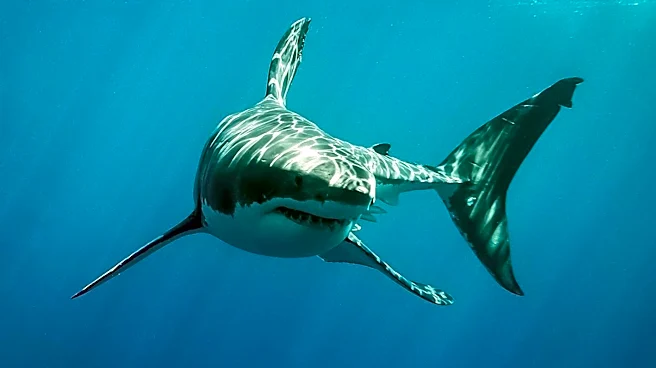
A 14-foot, nearly 1,700-pound male great white shark named 'Contender' was recently detected off the coast of North Carolina's Outer Banks. This shark, the largest male white shark ever tagged in the western North Atlantic, briefly triggered his satellite
tag, marking his presence in the area. The shark was first tagged in January 2024 off the coasts of Florida and Georgia and has since traveled over 7,000 miles. Researchers from Ocearch, the organization responsible for tagging Contender, are using the data to study the shark's movements, feeding habits, and role in the ecosystem. The shark is believed to be around 30 years old and is currently on his usual summer migration route towards cooler waters rich in prey, such as Cape Cod and Atlantic Canada.
Why It's Important?
The tracking of Contender provides valuable insights into the behavior and migration patterns of mature male great white sharks, which are crucial for understanding and conserving the species. This research can help scientists better understand the ecological role of great white sharks and their impact on marine ecosystems. The data collected can also inform conservation strategies and policies aimed at protecting these apex predators, which are vital for maintaining the balance of marine life. Additionally, the presence of such a large shark near popular tourist destinations like the Outer Banks highlights the need for public awareness and safety measures in areas frequented by these animals.
What's Next?
Researchers will continue to monitor Contender's movements through his satellite tag, which is expected to provide real-time data for up to five years. This ongoing study will contribute to a broader understanding of great white shark behavior and migration patterns. The findings may influence future conservation efforts and policies aimed at protecting shark populations. Additionally, the data could be used to educate the public about the importance of sharks in marine ecosystems and promote coexistence between humans and these apex predators.