


What's Happening?
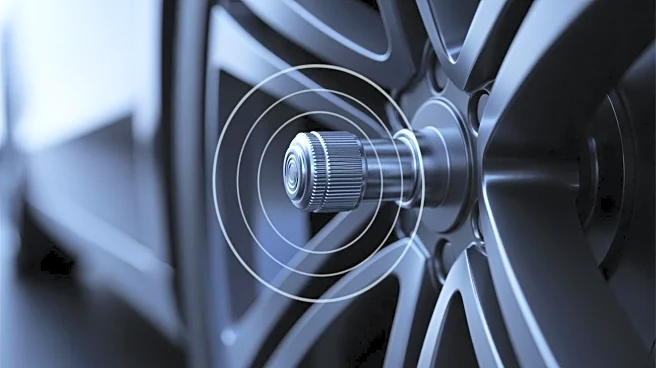
Research discussed by Tom Eston and Scott Wright highlights privacy risks associated with Tire Pressure Monitoring Systems (TPMS) in vehicles. These systems, which are mandatory in cars manufactured after 2008, broadcast unencrypted wireless signals that
can be intercepted to track vehicles. A study conducted by researchers at IMDEA in Madrid collected approximately 6 million signals from over 20,000 cars, revealing that these signals can disclose information such as tire pressure, car type, weight, and driving patterns. The study demonstrated that these signals could be captured with equipment costing around $100. The podcast hosts suggest potential mitigations, including rotating identifiers or implementing encryption to protect privacy.
Why It's Important?
The findings underscore significant privacy concerns for vehicle owners, as the unencrypted signals from TPMS can be exploited for unauthorized tracking. This poses a risk not only to individual privacy but also to broader security, as malicious actors could potentially use this information for nefarious purposes. The automotive industry and regulatory bodies may need to address these vulnerabilities to protect consumer privacy and prevent potential misuse. The issue also highlights the broader challenge of ensuring security in the rapidly expanding Internet of Things (IoT) landscape, where many devices are interconnected and potentially vulnerable to exploitation.