



What's Happening?
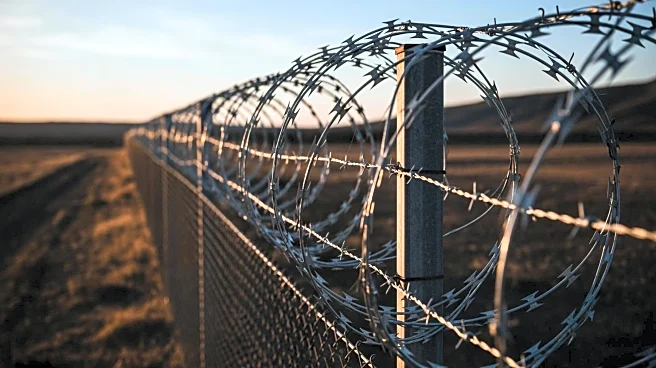
Residents along the seam line in central Israel are experiencing heightened security concerns following recent infiltrations by Palestinians crossing the separation fence. This situation has been exacerbated by a recent deadly attack near Ein Harod. The
Israeli government has allowed tens of thousands of Palestinians to enter Israel for work without permits, a policy that has been in place for about 20 years. This has led to periodic security operations to detain illegal crossers, most of whom are seeking employment. The proximity of Palestinian villages to Israeli communities, separated only by agricultural fields and the security fence, adds to the tension.
Why It's Important?
The ongoing security breaches along the Israeli separation fence highlight the complex interplay between economic necessity and security concerns. While the policy of allowing Palestinians to work in Israel addresses economic disparities, it also poses significant security risks. The recent incidents underscore the challenges faced by Israeli authorities in balancing these competing priorities. The situation has implications for regional security and the safety of Israeli residents living near the seam line. It also raises questions about the effectiveness of current security measures and the need for potential policy adjustments.
What's Next?
In response to the security concerns, Israeli authorities may consider strengthening security measures along the separation fence, including increasing patrols and reinforcing barriers. Discussions between community leaders and military officials are likely to focus on enhancing local security and preventing further infiltrations. The situation may also prompt a reevaluation of the policy allowing Palestinians to work in Israel without permits, balancing economic benefits with security risks. Additionally, there may be calls for increased cooperation between Israeli and Palestinian authorities to address the root causes of the issue.