



What's Happening?
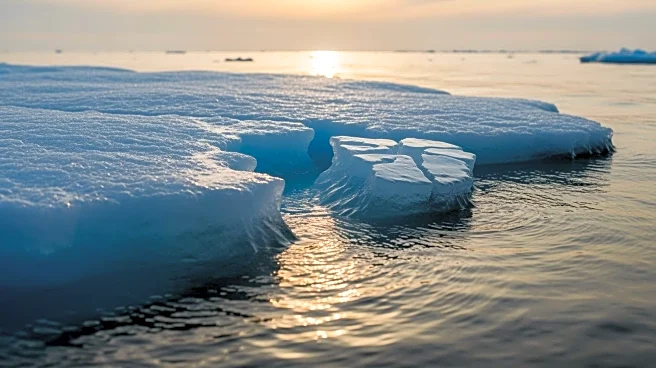
Recent data reveals that Arctic sea ice has shrunk to its lowest recorded winter level, coinciding with unprecedented heat records across the globe, including the United States, Mexico, Australia, Northern Africa, and parts of Northern Europe. Climatologist
Maximiliano Herrera described the March temperatures as the most extreme heat event in climatic history. The reduction in Arctic sea ice, which acts as Earth's natural refrigerator by reflecting sunlight, is contributing to increased ocean heat absorption. This phenomenon is believed to influence atmospheric pressure changes and potentially alter jet stream patterns, leading to extreme weather events.
Why It's Important?
The decline in Arctic sea ice is a significant indicator of climate change, with far-reaching implications for global weather patterns and ecosystems. The loss of reflective ice surfaces accelerates ocean warming, which can exacerbate climate-related issues such as rising sea levels and extreme weather conditions. This development poses challenges for wildlife dependent on sea ice, such as polar bears and seals, and could lead to geopolitical tensions as new shipping routes open in the Arctic. The situation underscores the urgent need for global climate action to mitigate these impacts.
What's Next?
As the summer melt season approaches, scientists will closely monitor the Arctic sea ice minimum in September. The ongoing reduction in sea ice could further influence global weather patterns, potentially leading to more frequent and severe heatwaves. Policymakers and environmental organizations may increase efforts to address climate change and its effects on the Arctic and global ecosystems. The situation also calls for international cooperation to manage emerging geopolitical challenges in the Arctic region.
Beyond the Headlines
The shrinking Arctic sea ice highlights the complex interplay between climate change and global weather systems. It raises ethical questions about humanity's responsibility to protect vulnerable ecosystems and the communities affected by climate change. The situation also emphasizes the need for sustainable development practices and innovative solutions to reduce carbon emissions and promote environmental resilience.