









What's Happening?
The University of Michigan is facing significant opposition and protests regarding its proposed $1.25 billion computing center project in Ypsilanti Township. University Regent Paul Brown joined a protest, criticizing the university for not engaging sufficiently
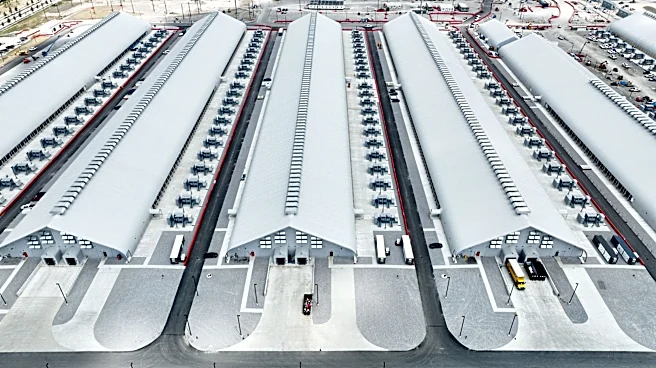
with the community. The facility, which the university describes as a high-performance research computing center, is projected to consume 100 megawatts of power, equivalent to approximately 80,000 homes, and create around 250 permanent jobs. However, the university is exempt from local property taxes and zoning rules, leading to concerns from residents and local officials. Ypsilanti Township has implemented moratoriums on supplying water and electrical infrastructure to resource-intensive facilities, and State Representative Jimmie Wilson Jr. has introduced legislation to rescind a $100 million state grant for the project. U.S. Representative Debbie Dingell has also called for a pause, citing a lack of transparency and potential impacts on residents.
Why It's Important?
This situation highlights a growing tension between large institutions and local communities, particularly concerning infrastructure projects with significant environmental and economic footprints. The University of Michigan's tax-exempt status and exemption from local zoning rules are central to the controversy, as Ypsilanti Township residents fear bearing the costs and environmental burdens without receiving substantial benefits, such as property tax revenue for public services. The project's substantial energy consumption raises questions about its environmental impact, despite the university's claims of net-zero emissions for purchased electricity by 2027. The involvement of organized labor in the protests, despite potential construction jobs, underscores a broader concern about the long-term economic benefits for local residents versus the short-term gains for external entities. This case could set a precedent for how large-scale university or institutional developments are scrutinized and regulated in communities with differing socioeconomic profiles.
What's Next?
The future of the University of Michigan's computing center project in Ypsilanti Township remains uncertain. Ypsilanti Township officials have authorized legal action to stop the data center, indicating a potential legal battle. State Representative Jimmie Wilson Jr.'s legislation to rescind the $100 million state grant will proceed through the legislative process, and its outcome could significantly impact the project's funding. The University of Michigan Board of Regents holds the ultimate authority to proceed or halt the project, and their decisions will be closely watched. Community opposition is expected to continue, with activists and local leaders pushing for greater transparency and accountability from the university. Further town hall meetings and public discussions are likely as stakeholders attempt to resolve the contentious issues surrounding the facility's construction and operation.
Beyond the Headlines
The controversy surrounding the University of Michigan's computing center project extends beyond immediate economic and environmental concerns, touching upon deeper issues of environmental justice and institutional responsibility. Critics, including Ypsilanti Township resident Leah Mills-Chapman, have labeled the project as an example of 'environmental racism,' arguing that the university is targeting a lower-income community with a project that offers minimal local benefits while potentially increasing costs and environmental strain. This raises ethical questions about how powerful institutions engage with and impact vulnerable communities. The debate also highlights the broader challenge of balancing technological advancement and research needs with community well-being and equitable development. The project's reliance on significant energy, even if sourced from renewables, prompts a re-evaluation of the true 'net-zero' claims and the upstream environmental costs associated with such large-scale operations.