



What's Happening?
Six months after its declaration, the Ebola outbreak in the Democratic Republic of the Congo (DRC) remains uncontrolled, according to Africa Centres for Disease Control and Prevention (Africa CDC) Director-General Jean Kaseya. Since May 15, over 11,200
cases and 5,500 deaths have been recorded. Kaseya stated that more than 80% of new cases are emerging outside contact lists, and over 65% of deaths are occurring in the community, outside of health centers. The outbreak, caused by the rare Bundibugyo strain of the Ebola virus, has affected eight of the DRC's 26 provinces and has spread to East, Central, and West Africa, marking its widest geographic reach to date. Delayed detection, ongoing conflict, and strained health services are contributing to the rapid spread. Coordination between the DRC and international donors is also cited as a problem, with only $1.3 billion of the $2.9 billion pledged to fight Ebola having been released.
Why It's Important?
The uncontrolled Ebola outbreak in the DRC poses a significant global health security threat. The Bundibugyo strain, for which no specific vaccine or treatment currently exists, has a high fatality rate, killing approximately half of those infected. The widespread geographic reach of this outbreak, extending beyond the DRC's borders, increases the risk of international transmission and could potentially overwhelm healthcare systems in neighboring countries. The challenges in containment, including conflict and insufficient funding, highlight systemic weaknesses in global health emergency preparedness and response. A failure to control this outbreak could lead to a humanitarian crisis of unprecedented scale, impacting regional stability and diverting critical resources from other public health initiatives. The lack of disbursed funds from international pledges also underscores a critical gap in financial commitment to combating such epidemics.
What's Next?
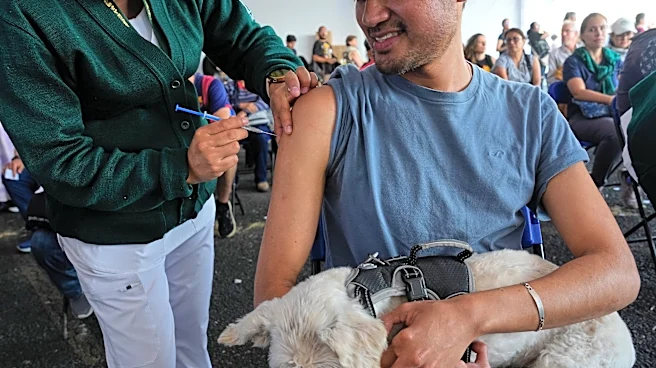
The World Health Organization (WHO) recently approved clinical trials for two new Ebola vaccines, with results anticipated in early 2027. These trials offer a glimmer of hope for developing effective tools against the Bundibugyo strain. Efforts are also underway to improve coordination between the DRC and donors, with Africa CDC working to ensure efficient use of funds and the DRC digitizing payrolls for health workers who have faced payment delays. However, sustained international commitment and improved local infrastructure will be crucial. The focus will remain on enhancing surveillance, contact tracing, and community engagement to curb the spread, alongside accelerating vaccine development and ensuring equitable distribution once available. Addressing the underlying issues of conflict and strengthening health services are also critical long-term objectives.
Beyond the Headlines
The ongoing Ebola crisis in the DRC exposes deeper issues beyond the immediate health emergency. The 'collective failure' in donor coordination and the slow disbursement of pledged funds highlight a persistent challenge in international aid: the gap between commitment and action. The conflict in the region further complicates humanitarian efforts, making it difficult for health workers to access affected populations and for communities to trust external interventions. This situation underscores the complex interplay between public health, political stability, and economic development. The lack of a specific vaccine for the Bundibugyo strain also points to disparities in research and development funding for diseases primarily affecting lower-income countries. Ultimately, this outbreak serves as a stark reminder of the interconnectedness of global health and the need for robust, equitable, and sustained international cooperation.