


What's Happening?
Taiwanese military forces are intensifying their defense preparations along the Tamsui River, a critical waterway in northwest Taiwan, as part of their annual Han Kuang military exercises. This focus comes amidst concerns that China could use the river
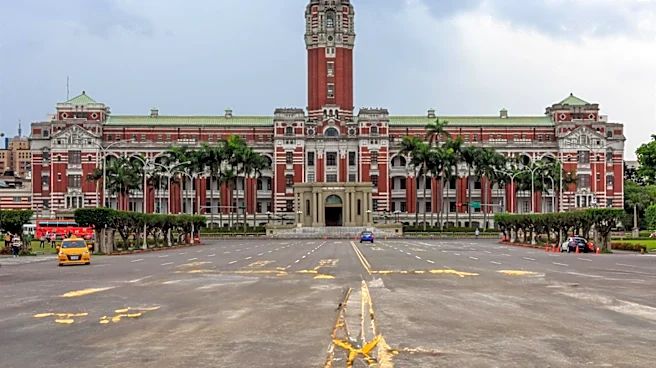
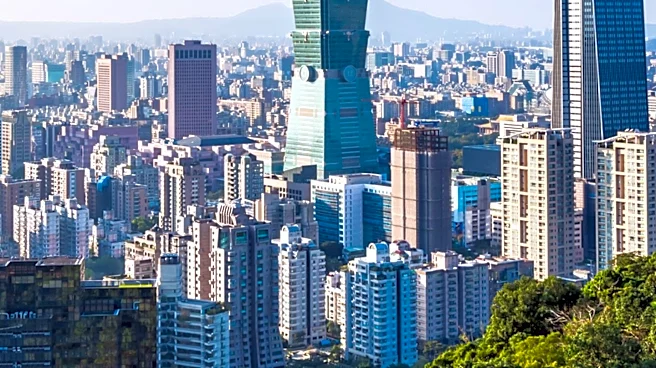
as a direct invasion route into central Taipei, where the presidential office is located less than a mile from the river. The Tamsui River, which converges in the capital and flows into the Taiwan Strait, is considered a 'real geographic vulnerability' by experts like Tristan Tang, a nonresident fellow at the US think tank National Bureau of Asian Research. Drills have included deploying defensive gear, setting up barricades and land mines, and practicing responses to potential 'decapitation strikes' or surprise attacks by the People's Liberation Army (PLA). The Tamsui River is part of an 'iron triangle' of vital defense features, including Bali Beach and Taipei Port, which could facilitate troop and supply offloading for an invading force. The exercises also involve moving troops from southern brigades to reinforce the capital area, making a surprise attack on northern Taiwan more difficult.
Why It's Important?
The heightened focus on defending the Tamsui River underscores Taiwan's evolving defense strategy against a potential Chinese invasion, moving beyond traditional D-Day style landing scenarios. This shift highlights a critical vulnerability that could allow a rapid advance into Taipei, directly threatening Taiwan's leadership and command structures. For the U.S., which maintains unofficial relations with Taiwan and is legally obligated to provide it with the means to defend itself, this development is significant. A successful Chinese incursion via the Tamsui River could drastically shorten the timeline for any potential international intervention, complicating U.S. strategic calculations and response efforts. The emphasis on delaying tactics and reinforcing the capital suggests Taiwan is preparing for a protracted defense, aiming to hold out long enough for external support. This also signals to China that Taiwan is actively adapting its defenses to counter specific invasion tactics, potentially influencing Beijing's strategic planning and the broader geopolitical dynamics in the Indo-Pacific region.
What's Next?
Taiwan is expected to continue its rigorous Han Kuang military exercises, with a sustained focus on strengthening defenses around critical geographic vulnerabilities like the Tamsui River. Future drills will likely incorporate more advanced scenarios and technologies to counter potential PLA tactics, including air-cushion landing craft and helicopter assaults. The ongoing modernization of Taiwan's military and the development of domestic defense capabilities will remain a priority, potentially leading to increased defense spending and procurement of advanced weaponry. The U.S. will likely continue to monitor these developments closely, providing military aid and support as mandated by law, which could further strain relations with China. International observers will be watching for any shifts in China's military posture or rhetoric regarding Taiwan, particularly in response to Taiwan's enhanced defensive measures. The effectiveness of these defensive strategies in deterring or mitigating a potential invasion will be a key factor in regional stability.
Beyond the Headlines
The strategic importance of the Tamsui River extends beyond its immediate military implications, touching upon the psychological and political resilience of Taiwan. A direct route into Taipei via the river represents not just a military objective for China, but also a potential 'decapitation strike' aimed at undermining Taiwan's government and national morale. Taiwan's proactive defense of this waterway reflects a deeper understanding of hybrid warfare and the need to protect against both conventional and unconventional invasion methods. The involvement of local authorities and the public in these drills, even in simulated scenarios, fosters a sense of national preparedness and unity. This focus also highlights the intricate interplay between geography, military strategy, and political will in modern conflict. The long-term implications could include a re-evaluation of urban defense strategies globally, as nations consider how to protect their capitals from rapid incursions facilitated by natural features. The ongoing tensions also underscore the ethical considerations of potential civilian casualties in densely populated urban areas during a conflict.