

What's Happening?
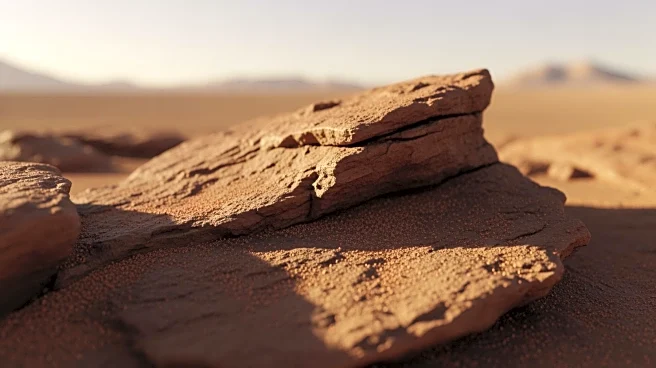
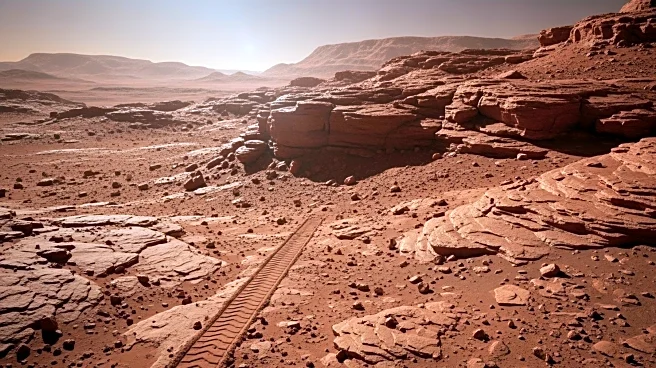
NASA's Curiosity rover is currently conducting a detailed investigation of the boxwork unit on Mars, a unique geological formation. The rover's Alpha Particle X-Ray Spectrometer (APXS) is being used to analyze the chemical composition of rocks and soils
in the area. This week, the rover executed several short drives to position itself for optimal study of various targets. The investigation aims to provide insights into the geological history of the region, which features polygonal structures and other intriguing formations. As the mission progresses, Curiosity is also preparing to explore the sulfate unit, another area of scientific interest on Mars.
Why It's Important?
The ongoing exploration by Curiosity is crucial for understanding Mars' geological history and assessing its past habitability. The data collected from the boxwork unit could reveal information about the planet's environmental conditions and the processes that shaped its surface. This knowledge is vital for future missions, including potential human exploration. The findings could also contribute to broader planetary science, offering comparisons with similar geological features on Earth. Curiosity's work exemplifies the importance of robotic exploration in advancing our understanding of the solar system.
What's Next?
Following the completion of the boxwork unit investigation, Curiosity will continue its journey up Mount Sharp, targeting the sulfate unit. This area is expected to provide further insights into the planet's climatic history. The rover will continue to conduct atmospheric measurements, particularly as Mars enters its dust-storm season. These observations will help scientists understand the planet's current climate dynamics. The mission team will analyze the data collected to refine their understanding of Martian geology and plan future exploration activities.