
What's Happening?
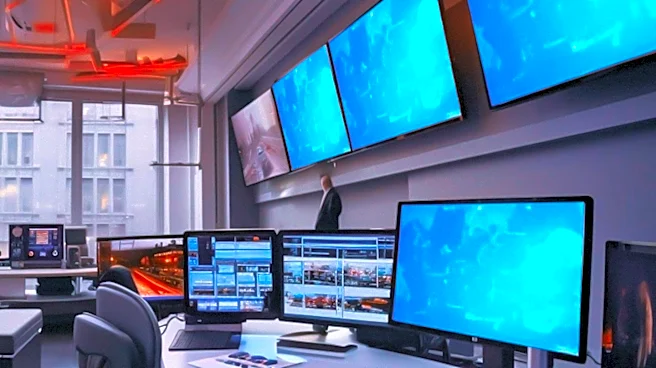
The Livingston County Sheriff’s Office (LCSO) in New York has acquired and deployed a new high-tech training simulator, the TI Training RECON 180 Simulation Environment. This system uses three eight-foot-tall
projector screens to create immersive, 180-degree scenarios for deputies to train in. Administrative Sergeant Scott Patterson, who has 15 years of law enforcement experience, assists with training deputies on the simulator and highlights its immersive nature. The system allows for practice in various situations, from routine traffic stops and domestic disturbance calls to mental health crisis responses and active shooter scenarios. Facilitators can adapt scenarios in real-time based on a deputy's actions, providing instant feedback. The LCSO purchased the simulator through a $150,000 grant from the Bureau of Justice Assistance, reflecting a shift towards modern policing priorities, including de-escalation techniques and proper use of force. After each simulation, trainers debrief deputies, assessing threat levels and the appropriateness of their techniques, with the system also displaying relevant Supreme Court cases and LCSO use-of-force policies.
Why It's Important?
This deployment is important for enhancing law enforcement training and public safety in Livingston County and potentially the broader region. The simulator provides a safe and controlled environment for deputies to repeatedly practice critical decision-making in high-pressure situations, which can build confidence and improve instinctual responses. This is particularly crucial for scenarios that are rare but high-stakes in real-world policing, such as complex traffic stops or domestic violence incidents. The focus on de-escalation techniques and proper use of force aligns with contemporary policing reforms aimed at reducing incidents of excessive force and improving community relations. By making the simulator available to other area law enforcement agencies, the LCSO is fostering consistent training standards across the region, which could lead to more unified and effective responses to incidents. Furthermore, the simulator offers significant cost savings by allowing for unlimited live-fire and taser repetitions without the expense of ammunition or cartridges, making advanced training more accessible and sustainable.
What's Next?
All members of the Livingston County Sheriff’s Office will receive a minimum of eight hours of annual simulator training, with those in special operations and training roles receiving more. The Sheriff’s Office plans to extend the use of the simulator to other law enforcement agencies in the area, hosting regional training sessions to establish consistent standards. This initiative suggests a future where advanced simulation technology becomes a more integral part of routine law enforcement training, potentially leading to wider adoption across other counties and states. The continuous training and debriefing process will likely refine deputies' responses and decision-making skills over time. The emphasis on practicing de-escalation and appropriate use of force indicates a sustained commitment to modern policing priorities, which could influence future training curricula and policy development within the department and among collaborating agencies.
Beyond the Headlines
The adoption of advanced training simulators like the TI Training RECON 180 represents a significant evolution in law enforcement education, moving beyond traditional classroom and firing range methods. This technology addresses ethical and practical challenges by allowing officers to experience and learn from complex, high-stress scenarios without endangering themselves or the public. The ability to replicate real-world situations and provide instant, scenario-based legal reinforcement can help embed best practices and legal compliance into an officer's response. This shift could lead to a more standardized and evidence-based approach to police training, potentially reducing variability in officer conduct and improving accountability. The focus on repetition to build instinctual responses highlights a psychological dimension of training, aiming to prepare officers for the unpredictable nature of their work. This technological integration also raises questions about the future of police training, including the balance between simulated and real-world experience, and how such tools can be continuously updated to reflect evolving societal expectations and legal frameworks.