





What's Happening?
Ukraine and the European Union are actively collaborating to finalize an emergency winter support package designed to counter ongoing Russian attacks on Ukrainian infrastructure. Ukrainian Prime Minister Sergii Koretskyi announced that this package will
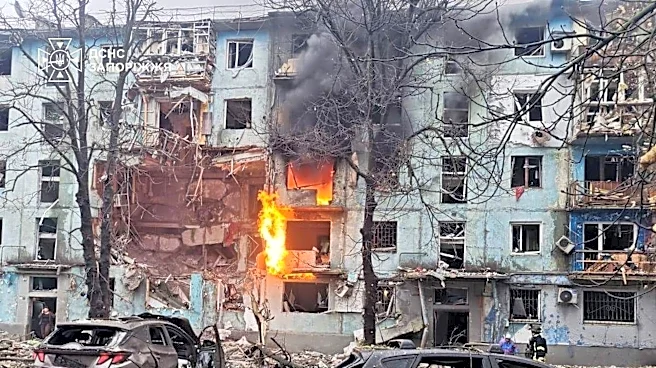
include essential items such as generators, charging stations, and buses. Additionally, it will provide assistance for restoring critical infrastructure like bridges and crossings, aiming to maintain reliable connections across the Dnipro River. Prime Minister Koretskyi highlighted the urgent need for this support, citing recent Russian strikes on power lines and substations in the Zaporizhzhia and Dnipropetrovsk regions, which left hundreds of thousands without electricity. He emphasized the extremely difficult situation in the energy sector and the critical importance of receiving this aid as quickly as possible. Koretskyi is scheduled to meet with European Commission President Ursula von der Leyen in Brussels to finalize the key details of this package.
Why It's Important?
This emergency winter support package is critically important for Ukraine as it faces sustained Russian attacks targeting its energy and civilian infrastructure, particularly as winter approaches. The provision of generators, charging stations, and assistance for infrastructure repair will directly help mitigate the humanitarian crisis caused by power outages and disrupted services. For the EU, this initiative demonstrates its continued commitment to supporting Ukraine's resilience and its ability to withstand external aggression. It also underscores the practical dimension of EU-Ukraine cooperation, moving beyond political statements to tangible aid that directly impacts the lives of Ukrainian citizens. Ensuring the functionality of essential services during winter is vital for preventing further displacement and maintaining public morale, which are crucial for Ukraine's overall stability and defense efforts.
What's Next?
Ukrainian Prime Minister Sergii Koretskyi is scheduled to hold talks with European Commission President Ursula von der Leyen in Brussels to agree on the final details of the emergency winter support package. Ukraine anticipates that the package will be finalized swiftly, with the first deliveries of essential equipment arriving as soon as possible. The immediate focus will be on deploying generators, charging stations, and buses to affected areas, as well as commencing repairs on damaged bridges and crossings. This rapid deployment is crucial to address the ongoing energy crisis and ensure that Ukrainian citizens have access to basic services throughout the winter months. The continued coordination between Ukrainian and EU officials will be essential to ensure the effective and timely implementation of this vital support.
Beyond the Headlines
The emergency winter support package for Ukraine carries deeper implications beyond immediate humanitarian relief. It highlights the evolving nature of modern warfare, where civilian infrastructure becomes a primary target, and resilience against such attacks is paramount. This initiative could set a precedent for how international bodies respond to deliberate targeting of civilian life support systems in conflict zones, emphasizing proactive measures rather than just post-disaster aid. Ethically, it underscores the international community's responsibility to protect civilian populations from the devastating effects of war, particularly during harsh weather conditions. Logistically, it presents a complex challenge of rapid deployment and coordination of diverse resources across borders, potentially refining international aid mechanisms. Culturally, it reinforces solidarity between Ukraine and the EU, fostering a sense of shared destiny and mutual support. This development could trigger long-term shifts in international humanitarian aid strategies, prioritizing infrastructure protection and resilience-building in conflict-affected regions.