





What's Happening?
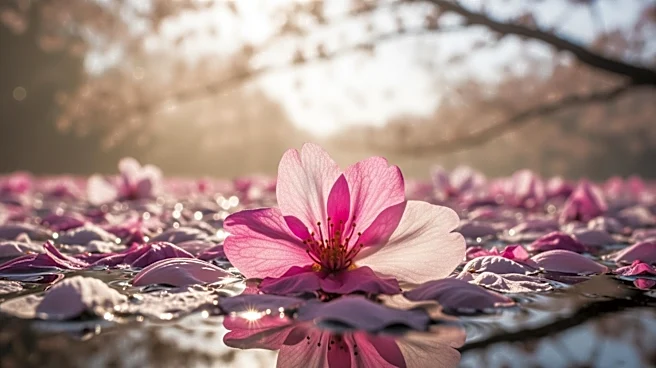
Global warming is causing significant shifts in the timing of Japan's cherry blossom season, a cultural and economic staple. According to recent data, the 'peak bloom' of cherry blossoms in Kyoto now occurs approximately two weeks earlier than in previous
centuries. This shift is attributed to rising spring temperatures, with March temperatures in Kyoto having increased by several degrees since the early 19th century. The cherry blossom season, known for its cultural significance and economic impact, particularly in tourism, is being disrupted. The season generates approximately $9 billion annually for Japan's tourism industry. The earlier blooming not only affects the aesthetic and cultural experience but also poses challenges for managing the influx of tourists seeking to experience the blossoms at their peak.
Why It's Important?
The earlier blooming of cherry blossoms due to global warming has broader implications beyond Japan's borders. It serves as a tangible indicator of climate change's impact on natural cycles and cultural traditions. The economic ramifications are significant, as the cherry blossom season is a major draw for tourists, contributing billions to Japan's economy. The disruption of this season could lead to economic losses and necessitate adjustments in tourism strategies. Additionally, the phenomenon highlights the global nature of climate change, as similar patterns are observed in other regions, including the United States, where cherry blossom peak bloom dates have also advanced. This underscores the need for international cooperation in addressing climate change and its effects on cultural and economic systems.
What's Next?
As global warming continues to affect natural cycles, Japan may need to adapt its tourism strategies to accommodate the changing cherry blossom season. This could involve adjusting marketing efforts and infrastructure to manage tourist expectations and experiences. Additionally, ongoing research and data collection on bloom dates will be crucial in understanding and mitigating the impacts of climate change on cultural and natural phenomena. The continuation of Professor Yasuyuki Aono's work by other researchers will provide valuable insights into long-term climate trends and their effects on cultural heritage. Policymakers and stakeholders in the tourism industry may need to collaborate on sustainable practices to preserve the cultural and economic value of the cherry blossom season.
Beyond the Headlines
The shift in cherry blossom bloom dates due to global warming raises ethical and cultural questions about the preservation of traditions in the face of environmental change. The cherry blossom, deeply embedded in Japanese culture as a symbol of the transient nature of life, now also symbolizes the urgent need to address climate change. This situation prompts reflection on how societies can balance cultural preservation with environmental sustainability. The phenomenon also highlights the importance of historical data in understanding climate trends, as the meticulous records of bloom dates provide a unique lens through which to view the impacts of global warming over centuries.