What's Happening?
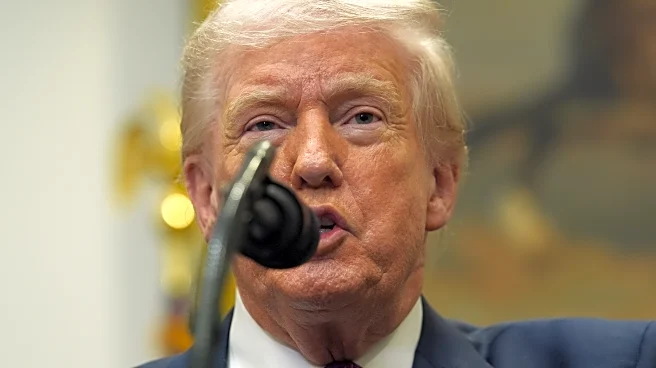
President Donald Trump announced a 10% import tax on goods from eight European countries, escalating to 25% by June 1, if a deal is not reached for the U.S. to purchase Greenland. This decision follows
opposition from Denmark, Norway, Sweden, France, Germany, the United Kingdom, the Netherlands, and Finland to U.S. control of Greenland. The announcement has sparked protests in Greenland and Denmark, with demonstrators advocating for Greenland's self-governance. A bipartisan U.S. congressional delegation visited Copenhagen to reassure Denmark and Greenland of American support, despite the tensions. Danish military officials have stated they do not expect military conflict with the U.S., emphasizing ongoing Arctic defense training with NATO allies.
Why It's Important?
The imposition of tariffs by President Trump could strain U.S. relations with key European allies, potentially impacting trade and diplomatic ties. The move underscores the strategic importance of Greenland, which is rich in untapped mineral resources and holds a significant geopolitical position in the Arctic. The tariffs could lead to economic repercussions for the involved European countries and may provoke retaliatory measures. The situation highlights the complexities of international diplomacy and the challenges of balancing national interests with global cooperation.
What's Next?
The U.S. and Denmark are expected to continue diplomatic discussions to resolve the dispute over Greenland. The establishment of a working group between Denmark and the U.S. aims to address the differences, although the exact purpose of this group remains contested. European leaders have reiterated that decisions regarding Greenland rest solely with Denmark and Greenland. The international community will be closely monitoring the situation, as any escalation could have broader implications for NATO and Arctic security.
Beyond the Headlines
The controversy over Greenland raises questions about national sovereignty and the ethics of territorial acquisition. It also reflects broader geopolitical tensions in the Arctic, where climate change is opening new shipping routes and access to resources, attracting interest from global powers like China and Russia. The situation may prompt a reevaluation of international policies regarding territorial claims and resource management in the Arctic region.