






What's Happening?
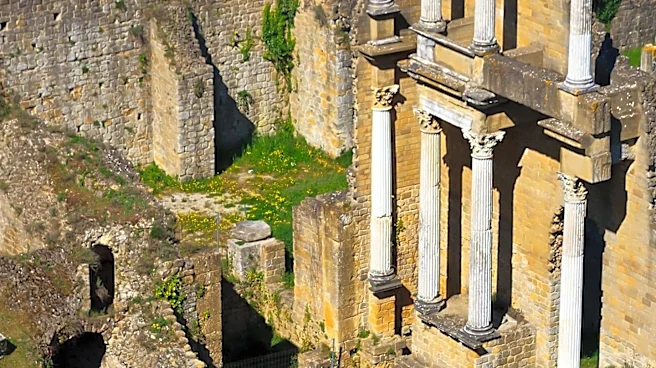
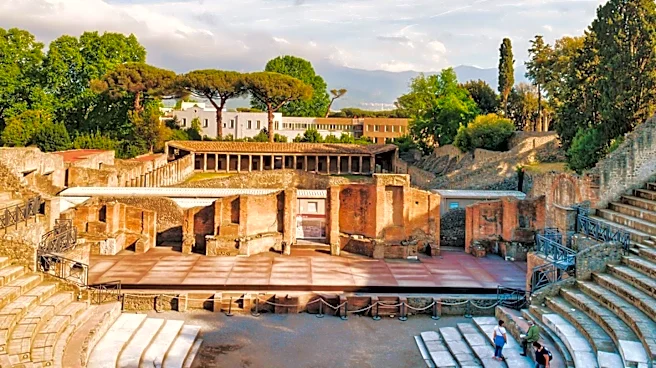
Franco Malosso von Rosenfranz, an Italian man, constructed a fake Roman amphitheatre near Vicenza, Italy, deceiving tourists for nearly a decade. He charged visitors €40 for guided tours, claiming the site was an ancient Roman discovery. The structure,
known as the Berico Maritime Amphitheatre, was promoted as a significant archaeological find, allegedly linked to historical figures like Julius Caesar and Cleopatra. However, it was later revealed that the site was built using modern materials such as fibreglass and concrete. Malosso was convicted of illegal construction and forgery, receiving a prison sentence of two years and four months, a €3,000 fine, and an order to dismantle the fake structures. The Municipality of Arcugnano is also seeking €560,000 in damages.
Why It's Important?
This case highlights the potential for heritage fraud to exploit cultural tourism, impacting both local economies and the integrity of historical education. The deception not only misled tourists but also raised questions about the verification processes for historical sites. The financial penalties and legal actions underscore the seriousness with which authorities view such fraudulent activities. The incident may lead to increased scrutiny and regulation of tourist attractions, particularly those claiming historical significance, to protect consumers and preserve cultural heritage.
What's Next?
The dismantling of the fake amphitheatre is expected to proceed, although the financial responsibility for restoring the site remains unresolved. The case may prompt Italian authorities to implement stricter regulations and verification processes for historical sites to prevent similar frauds. Additionally, the tourism industry might see a push for more transparency and authenticity in promoting cultural and historical attractions.