


What's Happening?
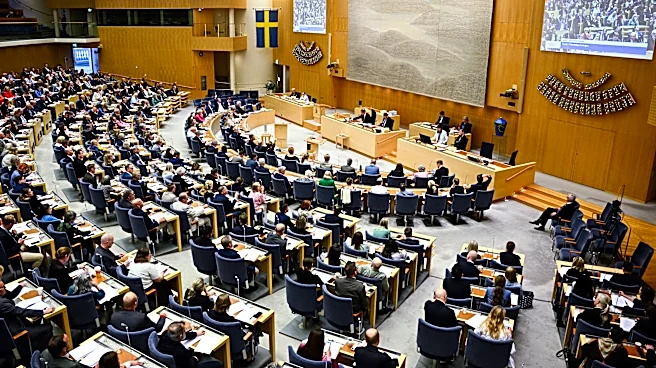
The Hungarian parliament has passed a constitutional amendment that imposes an eight-year term limit on the office of the prime minister. This amendment, approved by 135 votes in favor and 50 against, is designed to prevent former Prime Minister Viktor
Orbán from returning to power, as it applies retroactively. Orbán, who served as prime minister for a total of 20 years, would be barred from holding the position again if the amendment becomes law. The legislation now awaits the approval of Tamás Sulyok, the Fidesz-appointed president of Hungary. The amendment also aims to dismantle the Sovereign Protection Office and public trust foundations, which have been criticized for consolidating power under Orbán's regime. These changes are part of Prime Minister Peter Magyar's broader efforts to reform Hungary's political system and restore liberal democracy.
Why It's Important?
This legislative move marks a significant shift in Hungary's political landscape, as it seeks to curtail the influence of Viktor Orbán, a dominant figure in Hungarian politics for two decades. By imposing term limits, the amendment aims to prevent the concentration of power and promote democratic governance. The dismantling of institutions like the Sovereign Protection Office and public trust foundations could lead to a redistribution of power and resources, potentially impacting Hungary's political and educational systems. These changes may also influence Hungary's relationship with the European Union, as the EU has previously criticized Hungary for undermining democratic norms. The amendment reflects a broader trend of political reform in Hungary, with potential implications for governance and policy-making.
What's Next?
The amendment's future depends on the decision of President Tamás Sulyok, who has the authority to approve or return the legislation to parliament. If Sulyok rejects the amendment, lawmakers could override his decision with a second vote. Prime Minister Peter Magyar's administration is likely to continue pursuing reforms aimed at reducing the influence of Orbán and his allies. The political dynamics in Hungary may shift as these changes take effect, potentially leading to new alliances and power structures. Observers will be watching closely to see how these developments affect Hungary's domestic and international policies, as well as its standing within the European Union.