



What's Happening?
The Islamabad talks between Iran and the United States have hit a stalemate due to Iran's pre-conditions and President Trump's recent statements. Iran demands the withdrawal of all sanctions, the unfreezing of its assets, and recognition of its territorial
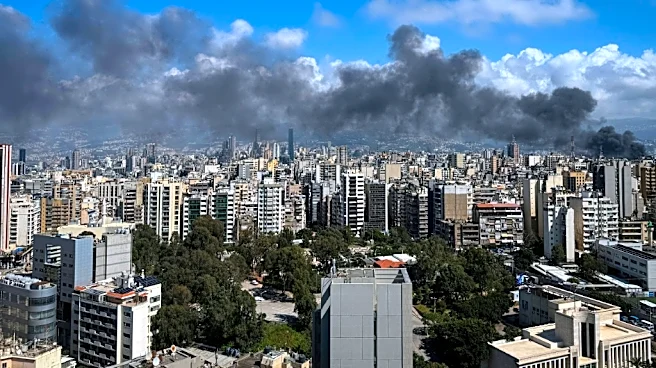
rights over the Strait of Hormuz. The U.S. delegation, supported by the UAE, argues that the Strait is an international waterway under the UN Convention on the Law of the Sea (UNCLOS), which allows freedom of navigation and overflight. However, Iran has not ratified UNCLOS and claims the Strait is within its territorial waters. President Trump has posted on Truth Social, accusing Iran of using international waterways for short-term extortion and stating that Iran has no cards left in the negotiations. The Iranian delegation has delayed its departure from Tehran, insisting on a simultaneous ceasefire in Lebanon. The talks are unlikely to proceed until trust is restored between the parties.
Why It's Important?
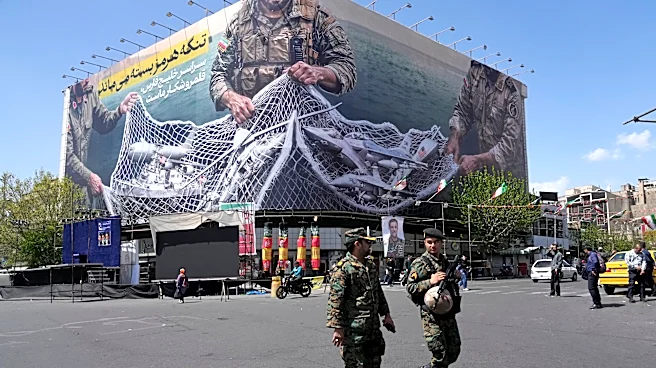
The outcome of the Islamabad talks holds significant implications for international relations and regional stability. The Strait of Hormuz is a critical chokepoint for global oil shipments, and any disruption could impact oil prices and economic stability worldwide. The U.S. and its allies, including Israel and Gulf states hosting U.S. military bases, are concerned about Iran's leverage over the Strait and its missile capabilities. A failure to reach an agreement could lead to increased tensions and potential military confrontations, affecting global security and economic interests. The talks also reflect broader geopolitical dynamics, with Iran's distrust of the U.S. complicating diplomatic efforts. The situation underscores the challenges in resolving conflicts without a political framework, as temporary pauses in hostilities do not equate to long-term solutions.
What's Next?
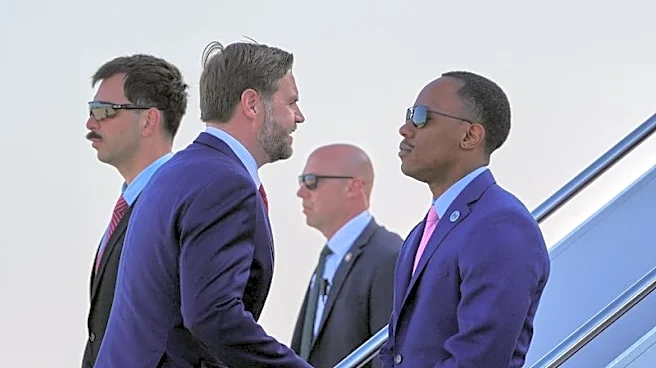
The next steps in the Islamabad talks are uncertain, as direct negotiations between the U.S. and Iranian delegations seem unlikely without a restoration of trust. The possibility of a state dinner later in the evening could provide an informal setting for discussions, but significant diplomatic efforts will be required to bridge the gap between the parties. The international community will be closely monitoring the situation, as any escalation could have far-reaching consequences. Stakeholders, including political leaders and regional allies, may need to engage in back-channel diplomacy to facilitate progress. The talks could also influence future U.S. foreign policy decisions and its approach to Iran, impacting broader Middle Eastern geopolitics.
Beyond the Headlines
The Islamabad talks highlight the complex interplay of international law, territorial rights, and geopolitical interests. Iran's insistence on its territorial claims over the Strait of Hormuz challenges established international norms and raises questions about the efficacy of global governance structures like UNCLOS. The situation also underscores the limitations of traditional diplomacy in resolving deeply entrenched conflicts, where historical grievances and distrust play significant roles. The talks could prompt discussions on the need for reforming international institutions to better address such disputes. Additionally, the negotiations reflect the broader struggle for influence in the Middle East, with major powers vying for strategic advantage in a region marked by volatility and competing interests.