






What's Happening?
Duquesne Light Co., in collaboration with officials from the U.S. Department of Energy (DOE), showcased ongoing grid modernization projects in Allegheny and Beaver counties, Pennsylvania. These initiatives are supported by a $19.7 million grant awarded
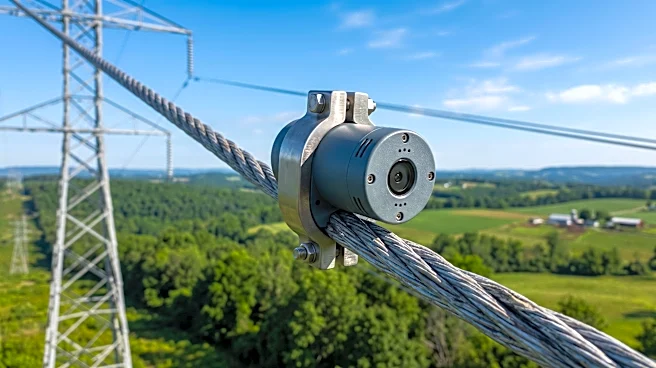
by the DOE in 2023, which Duquesne Light Co. matched with an equal investment over a five-year period. The funding is part of the federal Grid Resilience and Innovation Partnerships Program, aimed at enhancing grid flexibility and protecting the power system from extreme weather events. A key component of the modernization effort involves the installation of dynamic line rating sensors on seven of Duquesne Light Co.'s transmission lines. Developed by LineVision, these sensors provide real-time capacity insights and monitoring, with earlier deployments indicating a potential 25% increase in transmission line capacity. Additionally, Duquesne Light Co. is partnering with Itron to deploy tens of thousands of smart meters across its service territory, which will use real-time data to identify anomalies, support faster interconnection times, and build a foundation for future advanced grid applications.
Why It's Important?
These grid modernization projects in Western Pennsylvania are crucial for enhancing the reliability and resilience of the U.S. electrical infrastructure. The federal Grid Resilience and Innovation Partnerships Program highlights a national commitment to upgrading aging power systems, which are increasingly vulnerable to extreme weather and growing demand. The deployment of dynamic line rating sensors allows for more efficient use of existing transmission lines, potentially increasing capacity without building new infrastructure, which is a cost-effective solution to meet rising electricity needs. The introduction of smart meters will provide utilities with granular data, enabling quicker identification of issues, improved service, and a foundation for integrating future smart grid technologies. This public-private partnership between Duquesne Light Co. and the DOE serves as a model for other regions, demonstrating how collaborative efforts can lead to a stronger, more flexible, and secure power grid, essential for powering homes, businesses, and economic growth across the nation.
What's Next?
The deployment of new smart meters across Duquesne Light Co.'s service territory is scheduled to commence in October. This initiative, along with the ongoing use of dynamic line rating sensors, will continue to provide real-time data and insights crucial for optimizing grid performance. The partnership between Duquesne Light Co. and the DOE is expected to continue leveraging federal dollars to explore additional technologies that can further enhance service and value for customers. The success of these projects in Western Pennsylvania could influence future federal funding allocations and inspire similar modernization efforts in other states. As the industry continues to evolve, the focus will likely remain on integrating advanced technologies to improve grid resilience, efficiency, and capacity, especially in the face of increasing electricity demand and the challenges posed by climate change. The outcomes of these projects will be closely watched as models for broader national grid improvements.
Beyond the Headlines
The grid modernization efforts in Western Pennsylvania, particularly the use of dynamic line rating sensors and smart meters, represent a significant step towards a more intelligent and adaptive electrical grid. This shift has profound implications beyond immediate reliability improvements. It signifies a move towards a 'digital twin' of the physical grid, where real-time data allows for predictive maintenance, optimized energy flow, and enhanced cybersecurity. This level of intelligence can transform the grid from a passive delivery system into an active, responsive network, capable of integrating diverse energy sources and responding dynamically to demand fluctuations. The long-term impact includes fostering innovation in energy management, creating new job opportunities in grid technology, and potentially reducing energy costs for consumers through increased efficiency. However, it also raises questions about data privacy and the security of interconnected systems, highlighting the need for robust regulatory frameworks and cybersecurity measures to protect this critical infrastructure.