


What's Happening?
A recent study has highlighted the challenges faced by quantum circuits due to noise, which limits their effective depth and computational power. Quantum circuits, which are essential for quantum computing, are composed of quantum gates that manipulate
qubits. However, noise from environmental disturbances affects these circuits, reducing their efficiency. The study, conducted by researchers from EPFL, the Free University of Berlin, and the University of Copenhagen, found that noise significantly impacts the performance of quantum circuits, limiting their ability to perform complex computations.
Why It's Important?
The findings of this study are crucial for the development of quantum computing technology. As quantum computers hold the potential to solve complex problems beyond the capabilities of classical computers, understanding the limitations imposed by noise is essential. This research underscores the need for improved noise mitigation strategies and the development of noise-resilient algorithms. The study's insights could guide future advancements in quantum computing, influencing both academic research and industry practices.
What's Next?
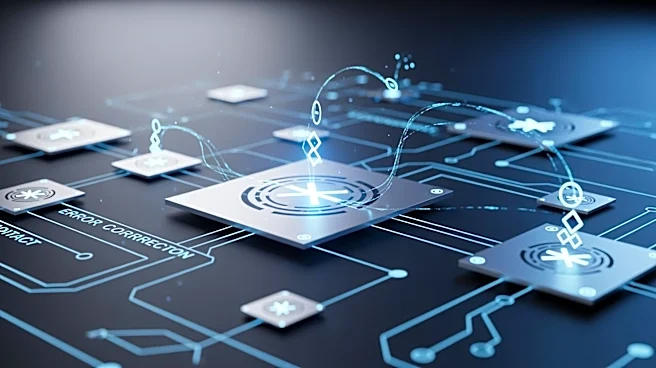
The study suggests that future efforts in quantum computing should focus on reducing noise and developing architectures that can withstand its effects. Researchers and industry leaders may explore new materials, error correction techniques, and innovative circuit designs to enhance the performance of quantum computers. As the field progresses, collaborations between institutions and companies could accelerate the development of practical quantum computing solutions.