




What's Happening?
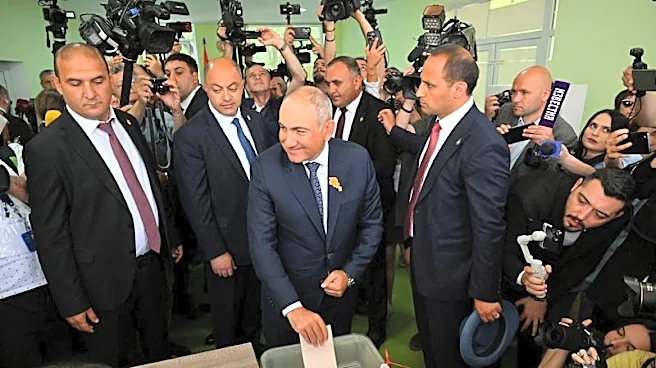
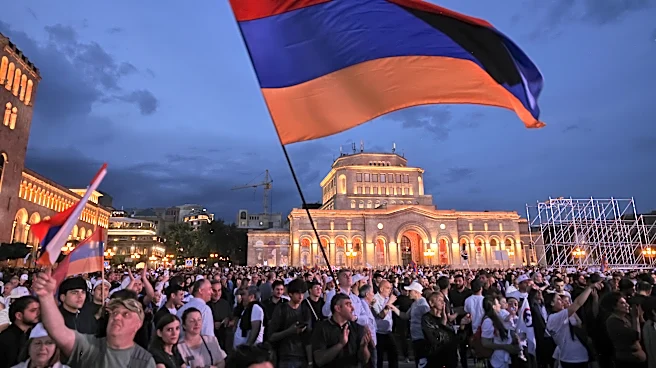
Armenians participated in a parliamentary election as the government, led by Prime Minister Nikol Pashinyan, seeks to reduce reliance on Russia and strengthen ties with the West. The election comes amid Russian-imposed restrictions on Armenian exports
and veiled threats from Moscow. Pashinyan's Civil Contract party aims for a strong mandate to pursue a new geopolitical course, while facing opposition from pro-Russian parties. The election is seen as a pivotal moment for Armenia's foreign policy direction.
Why It's Important?
The election results could significantly impact Armenia's geopolitical alignment, potentially shifting the balance of power in the region. A move towards the West could strain Armenia's relations with Russia, which has historically been a key ally. This shift may also influence regional stability, particularly in the context of Armenia's relations with neighboring countries like Azerbaijan. The outcome could affect international diplomatic efforts and economic partnerships involving Armenia.
What's Next?
Following the election, Armenia's government will likely face pressure to clarify its foreign policy stance. If Pashinyan's party secures a strong mandate, it may pursue closer ties with the European Union and the United States. However, this could provoke further economic and political pressure from Russia. The international community will be watching closely to see how Armenia navigates its relationships with major powers and addresses domestic challenges.