








What's Happening?
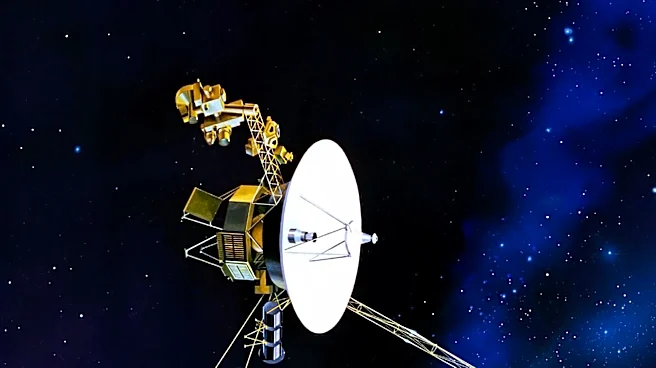
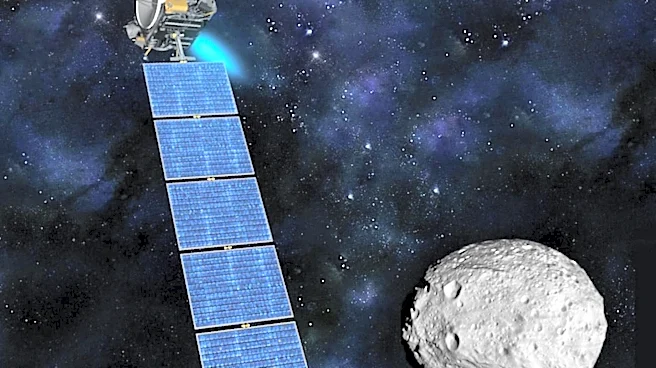
Over the July 4th weekend, two space probes from Japan and China made significant advances in asteroid exploration. The Japanese spacecraft Hayabusa2 conducted a flyby of asteroid 98943 Torifune, capturing high-resolution images and testing navigation
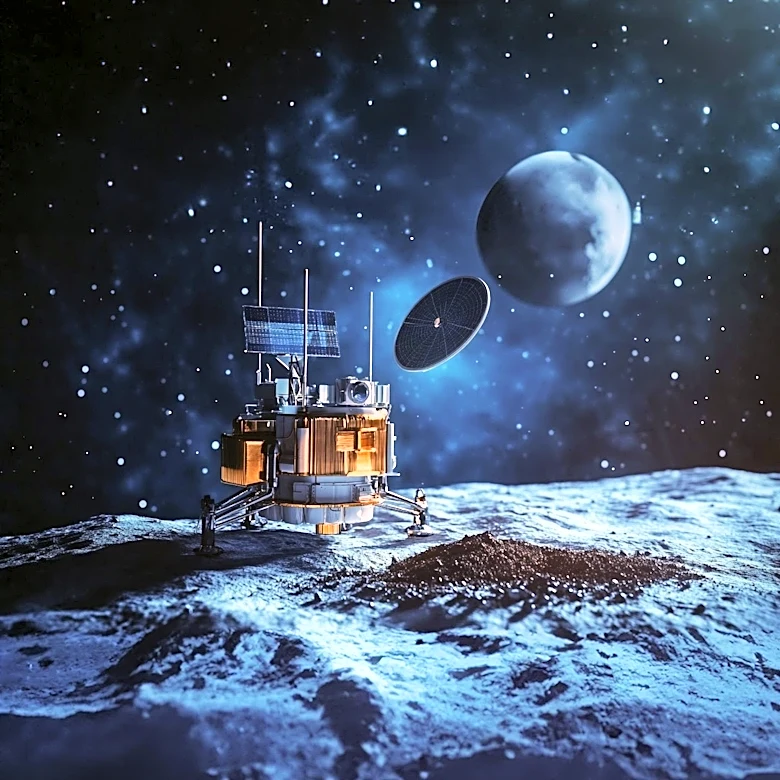
technologies for potential planetary defense applications. Meanwhile, China's Tianwen-2 mission arrived at asteroid 469219 Kamo'oalewa, a near-Earth object, to study and collect samples for return to Earth in 2027. These missions aim to enhance our understanding of asteroids and improve techniques for future space exploration.
Why It's Important?
These missions are crucial for advancing space exploration and planetary defense strategies. By studying asteroids like Torifune and Kamo'oalewa, scientists can gain insights into the composition and behavior of these celestial bodies, which are remnants from the early solar system. The data collected could inform future missions aimed at deflecting potentially hazardous asteroids. Additionally, the sample return mission from Kamo'oalewa will provide valuable material for scientific analysis, potentially revealing new information about the building blocks of our solar system.
What's Next?
The Hayabusa2 and Tianwen-2 missions will continue to gather data and refine their techniques for asteroid exploration. Hayabusa2 is set to rendezvous with another asteroid, 1998 KY26, in 2031, while Tianwen-2 will proceed to collect samples from Kamo'oalewa and later visit the main-belt comet 311P/PanSTARRS in 2035. These missions will contribute to a growing body of knowledge that supports both scientific discovery and the development of technologies for planetary defense.