








What's Happening?
The European Commission has introduced a new EU Sustainable Tourism Strategy aimed at bolstering the sector's competitiveness, sustainability, and resilience. This comprehensive strategy seeks to support businesses, particularly Small and Medium-sized
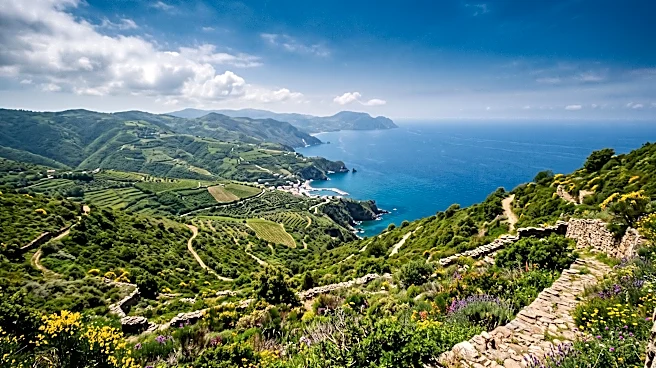
Enterprises (SMEs), in their growth and skill development, assist destinations in crafting balanced tourism offerings, improve traveler experiences, and maintain Europe's status as a premier global tourism destination. Tourism is a significant economic driver in Europe, contributing 10% to the EU's Gross Value Added, supporting over 20 million jobs, and comprising 5 million businesses, 99% of which are SMEs. The sector faces various challenges, including geopolitical uncertainties, skill shortages, climate change impacts, and evolving traveler expectations. The strategy outlines several flagship actions, such as the establishment of an EU Tourism Academy, an EU Tourism Observatory, a Common European Tourism Data Space, and an EU simplification initiative for tourism. It also promotes balanced tourism through an EU Model for Tourism Management and a Toolbox for Balanced Tourism to manage visitor flows and spread tourism benefits more evenly across seasons and regions.
Why It's Important?
This strategy is crucial for the European Union as tourism is a cornerstone of its economy and cultural identity. By focusing on sustainability and resilience, the EU aims to ensure the long-term viability of the sector, which is vital for job creation, regional development, and innovation. The emphasis on supporting SMEs, which form the backbone of the tourism industry, will help these businesses navigate challenges like digitalization and green transitions. Addressing skill shortages through initiatives like the EU Tourism Academy is essential for maintaining service quality and competitiveness. Furthermore, promoting 'balanced tourism' is key to mitigating the negative impacts of over-tourism on infrastructure, natural resources, and local communities, ensuring that the benefits of tourism are shared more equitably. The strategy's international outreach component will also reinforce Europe's global appeal, attracting more visitors and fostering international cooperation in the tourism sector.
What's Next?
The implementation of the EU Sustainable Tourism Strategy will involve a multi-faceted approach. A new EU Tourism Alliance will be formed, bringing together national, regional, and local authorities, tourism businesses, and stakeholders to ensure coordinated execution. The Commission will continue to provide financial support through various EU programs and funding instruments, with an estimated EUR 18 billion in EU support expected to benefit the sector by the end of the current Multiannual Financial Framework (2021–2027). Future actions include the development of the EU Tourism Academy to address skill gaps, the operationalization of the EU Tourism Observatory and Data Space for better data utilization, and the rollout of the EU Toolbox for Balanced Tourism to help destinations manage visitor flows. The strategy also anticipates stronger international cooperation through dialogues with key partner countries and regions, and the promotion of Europe via the Destination Europe framework and new European Capitals of Tourism Awards.
Beyond the Headlines
The EU Sustainable Tourism Strategy signals a significant shift towards a more holistic and responsible approach to tourism development within Europe. Beyond economic metrics, it addresses the ethical imperative of preserving cultural heritage and natural environments, ensuring that tourism benefits local communities rather than overwhelming them. The focus on digitalization and data utilization reflects a broader trend towards smart tourism, leveraging technology to enhance efficiency and visitor experience while minimizing environmental footprints. This strategy also highlights the growing recognition of tourism's vulnerability to global challenges like climate change and geopolitical instability, prompting a proactive stance on crisis preparedness and resilience building. By fostering a more balanced and sustainable tourism model, the EU aims to create a sector that is not only economically robust but also socially equitable and environmentally sound, setting a precedent for global tourism practices.