



What's Happening?
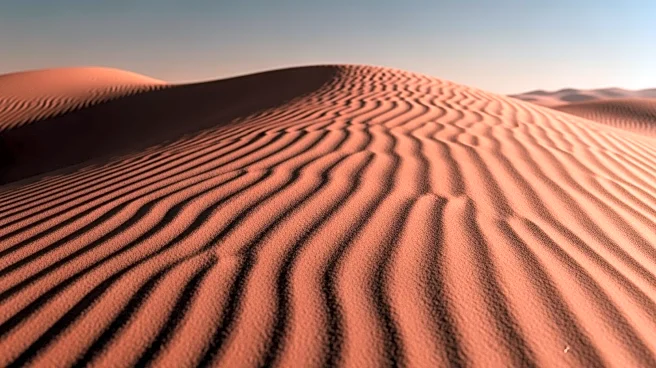
NASA's Perseverance rover has been investigating Martian megaripples in the 'Honeyguide' area, focusing on a feature named 'Hazyview.' These megaripples, which are sand formations up to 6.5 feet tall, are primarily shaped by wind and provide insights
into Mars' surface processes. The rover's study aims to understand how wind and atmospheric interactions have historically shaped the Martian landscape. The investigation includes over 50 observations using various instruments to analyze grain movement, mineralogy, and signs of atmospheric water interactions.
Why It's Important?
Understanding Martian megaripples is crucial for future human missions to Mars, as the chemistry and cohesion of Martian soils will impact mobility and resource extraction. The study of these wind-formed deposits helps scientists comprehend the planet's recent geological history and ongoing surface changes. This knowledge is vital for planning future exploration missions and ensuring the safety and success of human activities on Mars. The findings could also inform the design of equipment and strategies for navigating and utilizing the Martian environment.