
What's Happening?
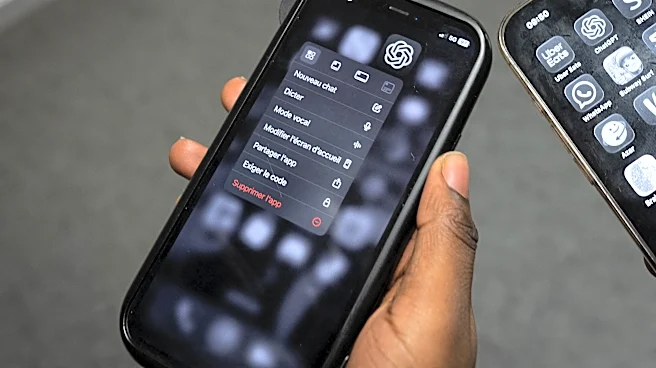
Amid a persistent shortage of human counselors, nearly half of U.S. students are now utilizing artificial intelligence (AI) chatbots for college and career guidance. Schools are also beginning to deploy
AI to answer frequently asked questions, aiming to free up counselors' time. The national student-to-school counselor ratio remains high at 372 students per counselor, far exceeding the American School Counselor Association's recommended 1:250 ratio. This reliance on technology is a rational response to scarce human resources, but it also highlights a fundamental issue with the traditional 'one-to-many' advising model in schools. Pilot programs have shown that while chatbots can offer modest increases in students' awareness of their networks and confidence in seeking help, they are not a replacement for human interaction. Some platforms are designed to coach students in drafting communications and rehearsing conversations to build confidence in reaching out to real people.
Why It's Important?
The increasing use of AI chatbots in student guidance signifies a critical shift in how educational support is delivered, driven by systemic understaffing in counseling services. This development has profound implications for student development, potentially democratizing access to information and support, especially for those in underserved areas. However, it also raises concerns about the quality and depth of guidance students receive, as AI, while efficient for factual queries, may lack the nuanced understanding and emotional intelligence of human counselors. The emphasis on building 'stronger networks' and a 'many-to-one' advising model, where AI facilitates connections to human mentors, teachers, and family, suggests a hybrid approach could be most beneficial. This approach leverages AI's efficiency while preserving the critical role of human relationships in student success, which research consistently shows is a proven driver for high school achievement, college access, and job opportunities.
What's Next?
The future will likely see continued integration of AI into educational guidance, with a focus on developing tools that enhance, rather than replace, human connections. States and school districts are urged to demand that advising technology helps students identify, strengthen, and expand their human networks, and to measure the growth of these networks as a desired outcome. This shift in focus could lead to the development of more sophisticated AI tools designed to facilitate authentic interactions and provide coaching for real-world networking. However, there is a need for more research into the long-term effects of AI reliance on student development and mental health. Policymakers will need to ensure that AI solutions are implemented thoughtfully, with clear guidelines and ethical considerations, to avoid exacerbating existing inequalities or creating new challenges for vulnerable students. The goal is to move towards a model where every student is surrounded by a robust support system, with AI acting as a powerful enabler.
Beyond the Headlines
The reliance on AI chatbots for student guidance touches upon broader societal questions about the role of technology in addressing human resource shortages and the nature of mentorship in a digital age. While AI offers scalability and instant access, the inherent value of human empathy, personalized understanding, and the ability to navigate complex emotional situations remains irreplaceable. The challenge lies in preventing AI from becoming a 'mask' for deeper systemic issues, such as underfunding in education and the undervaluation of counseling professions. This situation also highlights the ethical considerations of AI in sensitive areas like mental health and career development, where the potential for algorithmic bias or misguidance could have significant consequences. Ultimately, the integration of AI in student support systems will require a careful balance between technological efficiency and the preservation of essential human elements, fostering a generation that is both tech-savvy and deeply connected.