




What's Happening?
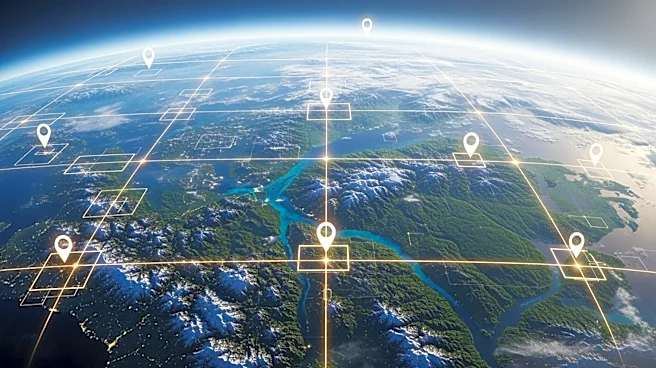
Landsat satellites, operated by NASA and the USGS, have expanded their capabilities to include nighttime imaging, enhancing their scientific value. Traditionally, Landsat has captured images during daylight, but now it also collects data during its ascending
orbit at night. This allows for the observation of thermal features, such as volcanoes and wildfires, using shortwave infrared and thermal infrared bands. The nighttime imaging capability is particularly useful for monitoring active volcanoes, wildfires, and urban heat islands. The initiative has led to systematic observations of areas like Yellowstone National Park, where thermal features are closely monitored.
Why It's Important?
The addition of nighttime imaging to Landsat's capabilities provides a more comprehensive understanding of Earth's dynamic processes. It allows scientists to monitor changes in thermal features and environmental conditions that are not visible during the day. This capability is crucial for disaster management, as it aids in tracking wildfires and volcanic activity, potentially improving response times and mitigation strategies. The data collected can also inform urban planning by identifying heat islands and assessing their impact on local climates.
What's Next?
As interest in nighttime imaging grows, Landsat is likely to receive more special requests for data collection. This could lead to further advancements in Earth observation technologies and methodologies. The data will continue to be made publicly available, supporting a wide range of scientific research and practical applications. Ongoing efforts to optimize the use of nighttime imaging will likely focus on enhancing data quality and expanding the range of observable phenomena.