


What's Happening?
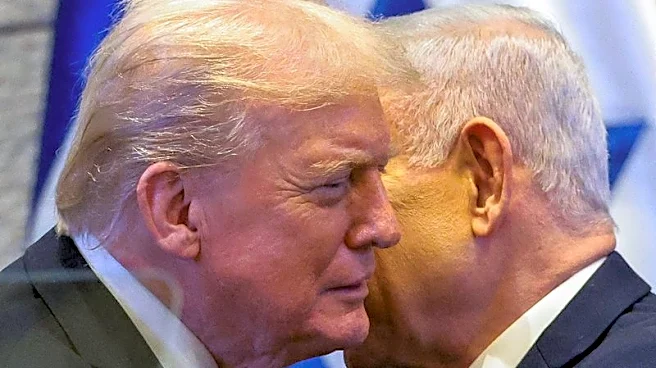
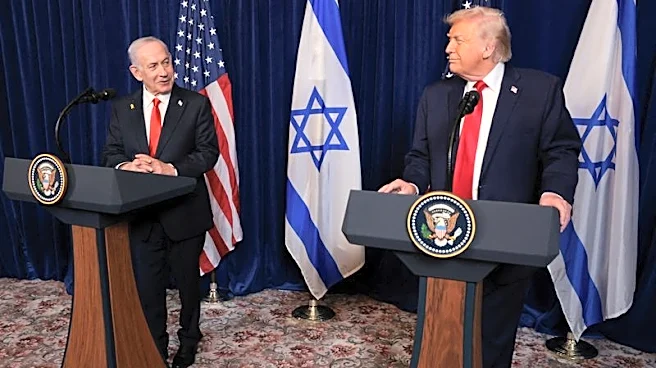
Recent tensions have emerged between President Trump and Israeli Prime Minister Benjamin Netanyahu, highlighting changes in the U.S.-Israel relationship. The relationship has been characterized by military cooperation but also moments of tension, particularly
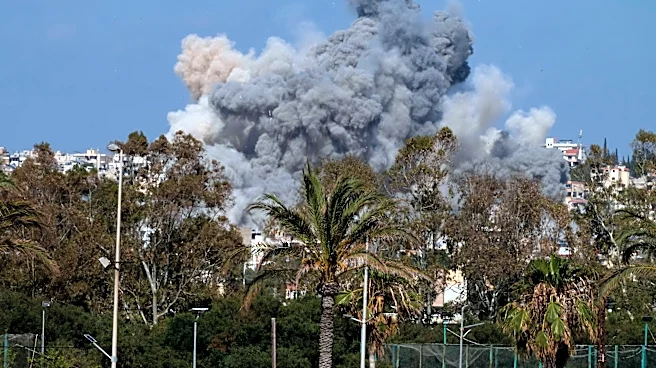
regarding negotiations with Palestinians. President Trump has supported Israel through actions like moving the U.S. embassy to Jerusalem, but frustrations have surfaced, including reports of a fiery phone call between Trump and Netanyahu. The U.S. provides critical military aid to Israel, which is essential for its operations in Lebanon and potential actions in Iran. The evolving dynamics reflect shifts in American public opinion and political priorities, with some factions growing weary of foreign intervention.
Why It's Important?
The U.S.-Israel relationship is crucial for both nations, particularly in terms of military cooperation and geopolitical strategy. Israel relies heavily on U.S. military aid, including advanced weaponry and defensive systems, to conduct operations in Lebanon and potentially Iran. The relationship influences American politics, especially among Republican and evangelical constituencies. However, changing public opinion and political dynamics could impact future U.S. support for Israel. The tensions between Trump and Netanyahu may affect diplomatic efforts and military strategies, with broader implications for regional stability and U.S. foreign policy.
What's Next?
The future of U.S.-Israel relations may depend on political developments and shifts in public opinion. President Trump could face pressure from his base to maintain support for Israel, but changing dynamics among younger and more populist voters may influence policy decisions. The ongoing military actions in Lebanon and potential operations in Iran will require continued U.S. support, but any changes in this support could have significant consequences for Israel's strategic capabilities. Diplomatic efforts to address regional conflicts and tensions will likely continue, with potential impacts on U.S. foreign policy and international relations.