






What's Happening?
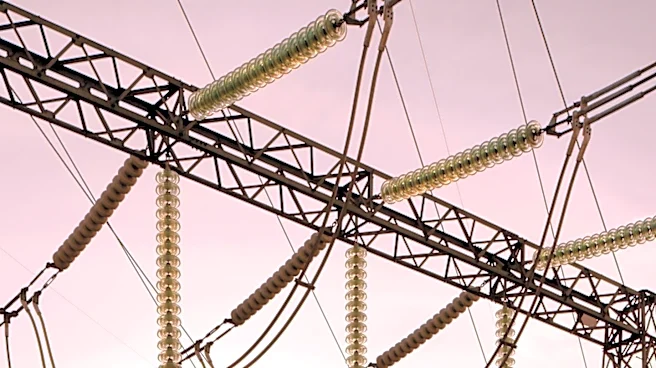
Representatives Scott Peters (D-CA) and Gabe Evans (R-CO) have introduced the Certainty in Litigation for Electric Asset Reliability (CLEAR) Act of 2026. This bipartisan legislation aims to accelerate the construction of large power line projects by streamlining
the permitting process and resolving ambiguities in current law. The bill proposes that Department of Energy (DOE)-coordinated transmission projects adhere to the clear standards of the Federal Power Act, rather than traditional judicial review processes that can lead to lengthy delays. According to Representative Peters, California alone has 201 of 501 approved transmission projects since 2000 still stuck in permitting, with 89 remaining delayed, contributing to a near doubling of electricity prices in the state over the past decade. The CLEAR Act seeks to establish clear rules for stalled projects, providing certainty for developers and stakeholders while offering relief to ratepayers from rising costs.
Why It's Important?
The introduction of the CLEAR Act is significant for addressing critical bottlenecks in U.S. energy infrastructure development, which directly impacts electricity costs and grid reliability. The current protracted permitting processes, as highlighted by the situation in California, lead to substantial delays and increased expenses that are ultimately borne by consumers. By aligning judicial review standards for DOE-coordinated transmission projects with those already used for hydropower and natural gas pipelines under the Federal Power Act, the bill aims to reduce legal challenges and expedite project timelines. This could lead to a more efficient and resilient national grid, capable of meeting rising energy demand and integrating more renewable energy sources. For businesses and consumers, a more reliable and affordable electricity supply can foster economic growth and improve quality of life, while also supporting national energy security goals.
What's Next?
The CLEAR Act will now proceed through the legislative process in Congress. If passed, it would implement several key changes, including a 120-day statute of limitations for filing lawsuits against transmission projects and a requirement for petitioners to participate in the environmental review process before litigation. Challenges would also be directly elevated to the U.S. Court of Appeals, aiming for faster final decisions. As leaders of the Problem Solvers Caucus’ Permitting Energy & Environment Working Group, Representatives Peters and Evans have a track record of bipartisan efforts to streamline federal permitting. The bill's progression will depend on its ability to garner sufficient bipartisan support and navigate potential opposition from groups concerned about environmental review processes or local impacts. Its success could set a precedent for future infrastructure projects, potentially accelerating the modernization of the U.S. energy grid.
Beyond the Headlines
The CLEAR Act touches upon a fundamental tension in modern infrastructure development: the balance between environmental protection, community input, and the urgent need for modernization and expansion. While streamlining permitting is crucial for efficiency and cost reduction, concerns often arise regarding potential impacts on local ecosystems, property rights, and community health. The bill's emphasis on early engagement in the environmental review process aims to mitigate some of these concerns, but the shift in judicial review standards could be seen by some as reducing avenues for public challenge. This legislative effort reflects a broader national debate on how to accelerate critical infrastructure projects—from energy to transportation—while upholding democratic processes and environmental safeguards. The outcome of the CLEAR Act could influence future legislative approaches to infrastructure development, potentially shaping the legal and regulatory landscape for decades to come.