








What's Happening?
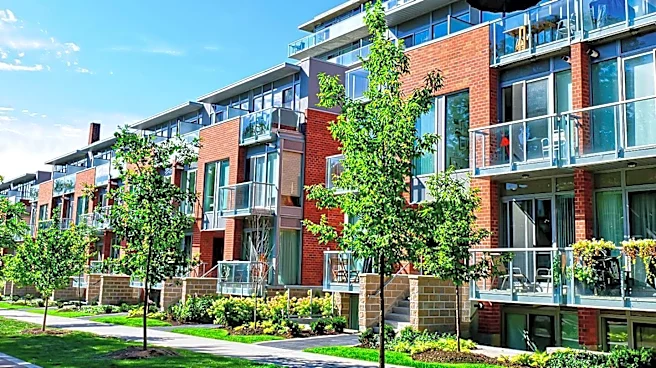
Charleston, South Carolina, is celebrating the completion of 10 new affordable townhomes on Juniper Street in West Ashley, marking a significant step in the city's 'Project 3500.' This initiative, led by Mayor William Cogswell, aims to deliver 3,500 affordable housing
units to the city by 2032. The new townhomes have enabled several first-time buyers, including Mika Gadsden, Director of Sustainability for the city, to achieve homeownership through Charleston's First-Time Homeownership Program. The city invested $3.7 million in the Juniper Street development, with homeowners paying just under $280,000 after a $60,000 city subsidy. Rebecca Dail Moses, Interim Director of Housing and Community Development, noted that the deeds include restrictions to maintain affordability for 99 years. Since 2024, 400 units have been completed, with 1,200 more currently in development.
Why It's Important?
This development is crucial for Charleston as it addresses a pressing need for affordable housing in a rapidly growing U.S. city. The 'Project 3500' initiative demonstrates a proactive approach by local government to tackle housing affordability challenges, which are prevalent across many urban centers. By providing subsidies and implementing long-term affordability restrictions, the city aims to ensure that these homes remain accessible to future generations. The success of programs like the First-Time Homeownership Program can significantly impact individuals and families, offering stability and wealth-building opportunities. The project also highlights the importance of strategic planning, with city officials expecting to present a new 'Peninsula Plan' in November to guide future growth and development, ensuring that housing initiatives are integrated into broader urban planning efforts.
What's Next?
Charleston officials are committed to accelerating the pace of affordable housing development to meet the ambitious 'Project 3500' goal of 3,500 units by 2032. The city plans to continue its creative financing strategies and prioritize affordable housing in its development agenda. The upcoming 'Peninsula Plan' in November will be critical in guiding future growth, infrastructure, and development, including the remaining units needed for Project 3500. While the peninsula is a primary focus, more affordable homes are planned citywide, particularly in areas like James Island, John's Island, and West Ashley, where significant growth is projected. The city will likely explore additional partnerships and funding mechanisms to sustain this momentum and ensure the long-term success of its affordable housing initiatives.
Beyond the Headlines
The affordable housing crisis in U.S. cities like Charleston has far-reaching implications, affecting economic equity, social mobility, and community stability. Initiatives like 'Project 3500' are not merely about building houses; they are about creating pathways to homeownership for diverse populations, fostering inclusive growth, and preventing displacement. The 99-year affordability restrictions on the deeds represent an innovative approach to combat gentrification and ensure that housing remains affordable for generations, addressing a common criticism of short-term affordable housing solutions. This project also underscores the role of local government in addressing market failures and promoting social welfare. The personal story of Mika Gadsden highlights the emotional and transformative impact of such programs, demonstrating that homeownership, often perceived as unattainable, can become a reality through targeted public policy and investment.