



What's Happening?
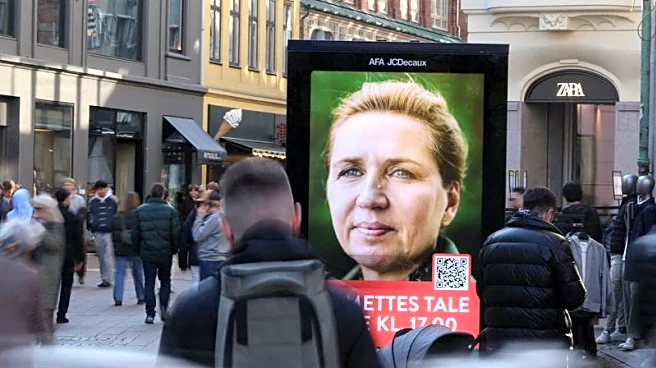
In the recent Danish election, Prime Minister Mette Frederiksen's Social Democrats and other left-leaning parties, collectively known as the 'red bloc', failed to secure a majority in the 179-seat parliament. Despite winning the most votes, the left bloc fell
short with 84 seats, while the right-leaning 'blue bloc' secured 77 seats. This outcome places Lars Løkke Rasmussen, leader of the non-aligned centre-right Moderates, in a pivotal position with his 14 seats, making him a potential kingmaker in the formation of a new government. The election was influenced by domestic issues such as a proposed wealth tax and the cost of living crisis, alongside geopolitical tensions with the U.S. over Greenland.
Why It's Important?
The election results highlight the fragmented political landscape in Denmark, with no clear majority emerging. This situation could lead to prolonged coalition talks and potential shifts in policy direction. The geopolitical tension with the U.S. over Greenland adds an international dimension to the domestic political scene, potentially affecting Denmark's foreign relations and internal policies. The proposed wealth tax, aimed at funding education, has sparked debate, reflecting broader economic and social challenges facing the country. The outcome of these coalition talks could influence Denmark's approach to these issues and its role in international affairs.
What's Next?
Denmark faces weeks of coalition negotiations, with the possibility of a centre-left or centre-right coalition emerging. Lars Løkke Rasmussen's role as a kingmaker will be crucial in these discussions. The outcome will determine the direction of Denmark's domestic and foreign policies, particularly regarding economic reforms and its stance on international issues like Greenland. The political landscape remains uncertain, with potential implications for Denmark's governance and its relationship with global powers.