



What's Happening?
Research published in Nature Communications reveals that the molecular and structural properties of dissolved organic matter (DOM) remain largely unchanged during the formation of Weddell Sea Deep Water (WSDW), a precursor to Antarctic Bottom Water (AABW).
AABW is the coldest, densest, and most voluminous water mass globally, playing a vital role in sequestering carbon and nutrients in the abyssal ocean for centuries. The study, which investigated solid-phase extractable DOM (SPE-DOM) transformations in the Weddell Sea, found that shelf processes minimally affect the exported organics into the deep sea. This is likely due to the efficient remineralization of newly produced organic matter into inorganic carbon, enhanced by the unusually long residence times of water on the Weddell Sea continental shelf, which can be up to 12 years. The research indicates that the dominant, recalcitrant DOM signature in WSDW is established before the mixing of dense shelf waters with warmer off-shelf waters, suggesting little to no net input of labile carbon to SPE-DOM, despite productive surface waters.
Why It's Important?
This research is crucial for understanding the long-term carbon storage capacity of the global ocean, which has significant implications for climate change mitigation efforts. The Southern Ocean is a substantial carbon sink, absorbing approximately 1 PgC per year, representing about 40% of the global ocean's uptake of anthropogenic CO2 emissions. The finding that DOM properties are conserved during deep-water formation in the Weddell Sea suggests that the deep ocean's ability to store carbon is robust against certain shelf processes. However, the study also notes that AABW formation has dramatically reduced in recent decades, a trend potentially linked to climate change. A decline in deep and bottom water formation could alter the amount and composition of DOM exported to the deep ocean, with potentially long-term effects on global carbon storage. Understanding these mechanisms is vital for refining climate models and predicting future carbon cycle dynamics, impacting global climate policy and environmental strategies.
What's Next?
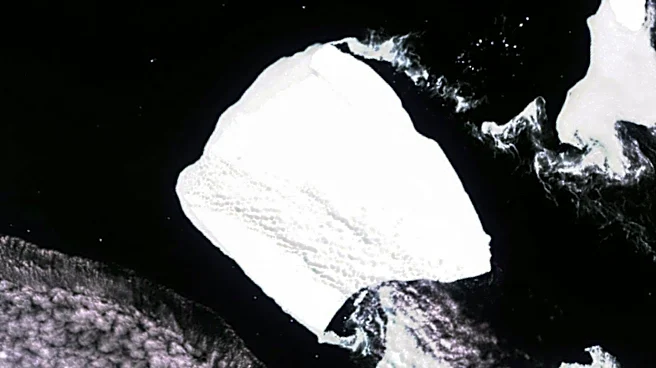
The study highlights that warming in the Antarctic and Southern Ocean regions is reducing sea ice formation, which could potentially increase CO2 exchange with the atmosphere and primary production. This change might lead to greater production of fresh, labile DOM. If this labile DOM is not fully converted to inorganic dissolved inorganic carbon (DIC), it could become detectable at a molecular level in the future, potentially altering the composition of organic carbon exported to the deep ocean. Continued monitoring and research will be necessary to track these potential changes and their impact on abyssal carbon storage. The findings underscore the need for ongoing climate model simulations to project the future decline of AABW formation due to surface warming, sea ice decline, and enhanced ice shelf melt, and to assess the subsequent effects on the ocean's carbon sequestration capabilities.
Beyond the Headlines
The conservation of DOM properties during deep-water formation in the Weddell Sea offers a deeper insight into the resilience and complexity of natural carbon sequestration processes. It suggests that certain fundamental biogeochemical pathways in the deep ocean are highly stable, even as surface conditions change. However, the observed decline in AABW formation due to climate change presents a critical long-term challenge. This raises ethical questions about humanity's impact on vast, remote oceanic systems that play a crucial role in regulating global climate. The potential for increased labile DOM in the future, if not fully remineralized, could represent a subtle but significant shift in the deep ocean's carbon chemistry, with unknown consequences for marine ecosystems and the global carbon budget. This research emphasizes the interconnectedness of surface and deep-ocean processes and the need for a holistic understanding of the Earth's climate system to inform sustainable practices.