
What's Happening?
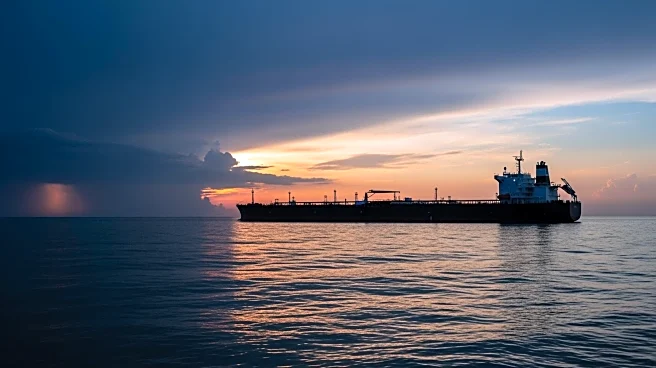
The United States has seized another oil tanker off the coast of Venezuela, as part of a blockade ordered by President Trump to prevent sanctioned oil tankers from entering or exiting the country. The US
Coast Guard, supported by the Pentagon, conducted the operation under 'Operation Southern Spear' to dismantle illicit criminal networks. The tanker, flying under the flag of Panama, was reportedly not targeted by US sanctions, marking an escalation in US pressure on Venezuela. The Venezuelan government condemned the seizure as 'theft and hijacking' and plans to file a complaint with the United Nations Security Council. This move is part of broader US efforts to curb the flow of Venezuelan oil, which is believed to fund narco-terrorism in the region.
Why It's Important?
The seizure of the oil tanker highlights the ongoing geopolitical tensions between the US and Venezuela. This action could further strain relations in Latin America, potentially leading to increased refugee flows into neighboring countries like Brazil. The US's aggressive stance may also provoke regional instability, as historical US interventions in Latin America have left a legacy of distrust. The situation underscores the complex interplay of international law, economic sanctions, and regional politics, with significant implications for global oil markets and diplomatic relations.
What's Next?
Venezuela has vowed to take further steps, including filing a complaint with the United Nations Security Council. The international community will be watching closely to see how this situation develops, particularly in terms of potential military escalation. The US's actions may prompt responses from other Latin American countries, either in support of or opposition to the blockade. The outcome could influence future US foreign policy decisions in the region and impact global perceptions of US interventionism.