


What's Happening?
Delta Air Lines CEO Ed Bastian has publicly criticized Congress for the ongoing situation where Transportation Security Administration (TSA) agents are working without pay due to a partial government shutdown. Bastian described the situation as 'inexcusable'
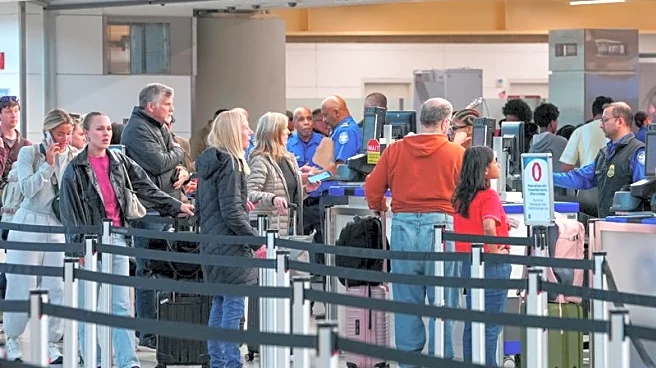
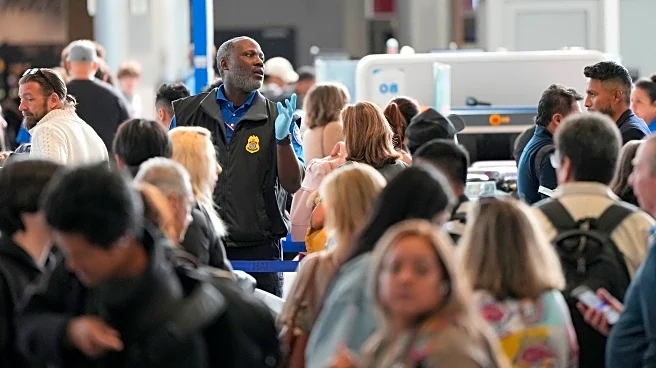
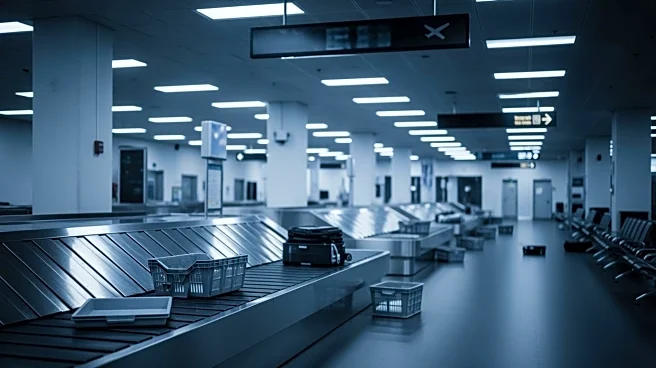
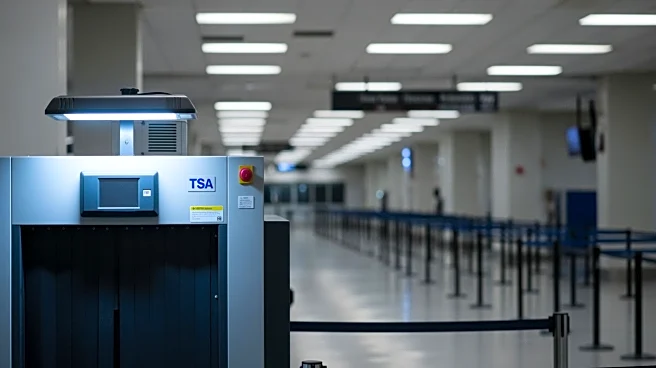
and accused lawmakers of using TSA agents as 'political chips.' The shutdown has resulted in significant staffing shortages at airport security checkpoints, leading to longer lines and delays at major airports, including Atlanta. The issue stems from a failure to fund the Department of Homeland Security, leaving about 50,000 TSA officers unpaid. Senate Democrats have blocked a bill to restore funding, while House Speaker Mike Johnson claims the House has passed legislation to fund the department, which Senate Democrats have repeatedly blocked.
Why It's Important?
The situation has significant implications for the airline industry and travelers. The lack of pay for TSA agents is causing increased call-out rates and resignations, exacerbating staffing shortages and leading to longer wait times and delays at airports. This disruption affects the efficiency of air travel and could have economic repercussions for airlines and related industries. The public's frustration with travel delays and cancellations is mounting, and the issue highlights the broader political impasse affecting essential government services. The airline industry is urging Congress to pass legislation to ensure TSA workers are paid during shutdowns, emphasizing the need for stability in federal aviation operations.
What's Next?
Airline executives, including those from Delta, American, United, Southwest, and JetBlue, have sent an open letter to lawmakers urging immediate action to restore pay for federal aviation workers. They warn that the situation will worsen if agents continue working without pay. The letter calls for legislation to guarantee pay for TSA officers, air traffic controllers, and customs agents during future shutdowns. The ongoing political standoff suggests that further negotiations and legislative efforts will be necessary to resolve the funding impasse and prevent future disruptions in airport operations.