







What's Happening?
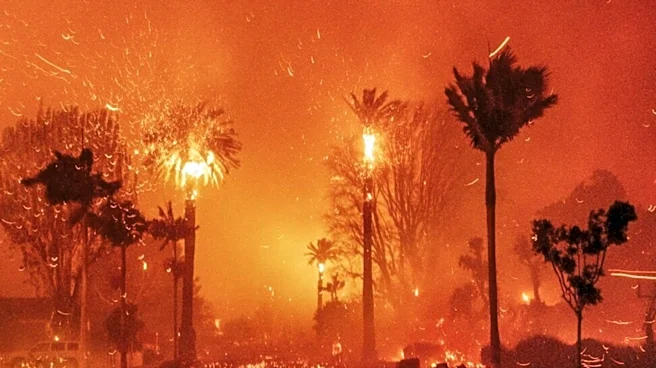
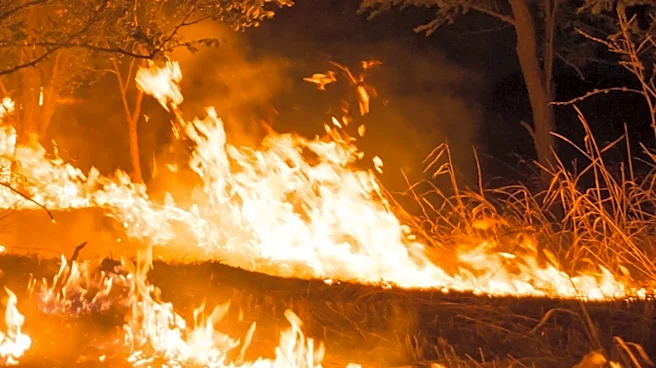
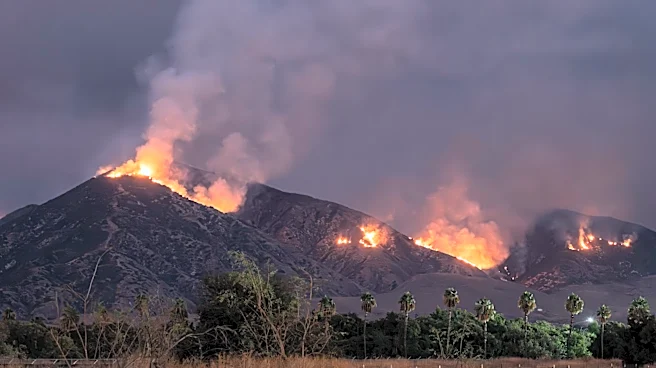
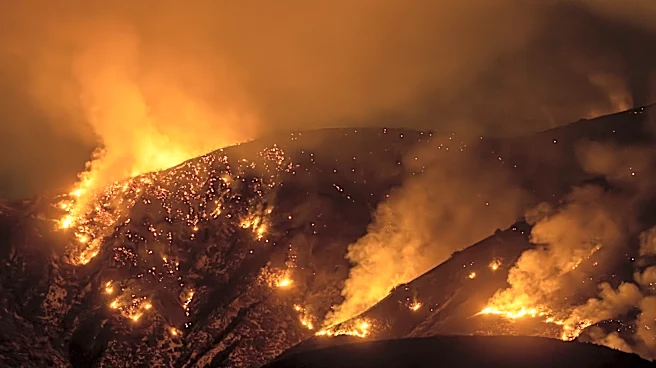
A fast-moving brush fire, known as the Summit Fire, erupted in Los Angeles County, California, on Friday afternoon, covering nearly 3,000 acres. The fire began around 12:49 p.m. near Jesus Canyon Road and East Avenue Z in the Llano area, south of State
Route 138. It quickly spread into the Angeles National Forest, prompting evacuations and threatening homes. Firefighters from Los Angeles and San Bernardino counties are actively working to contain the blaze and protect nearby communities. The fire is destroying Western Joshua trees, a species protected under California law. Residents in evacuation Zone LAC-E107 have been ordered to leave immediately, while those in Zones LAC-E1340 and LAC-E127-C are under evacuation warnings. Despite efforts, the fire remains 0% contained, and its cause is under investigation.
Why It's Important?
The Summit Fire poses significant risks to both human safety and the environment. The destruction of Western Joshua trees, which are culturally and ecologically significant, highlights the environmental impact of the fire. The rapid spread of the blaze threatens homes and communities, necessitating urgent evacuation measures. The fire also affects air quality, with smoke advisories issued for areas like Big Bear Lake and Lake Arrowhead. The situation underscores the challenges faced by firefighting teams in managing large-scale wildfires, which are becoming increasingly common due to climate change and other factors. The need for additional resources, such as airtankers, reflects the severity of the situation and the ongoing threat to public safety.
What's Next?
Firefighting efforts will continue as crews work to contain the Summit Fire and prevent further damage. Authorities are focusing on protecting homes and communities at risk, while monitoring air quality impacts. The smoke advisory remains active until shifting winds are expected to clear the region. Investigations into the cause of the fire are ongoing, and officials are likely to assess the damage to structures and the environment once the fire is contained. The situation may prompt discussions on fire prevention strategies and resource allocation for future incidents.