

What's Happening?
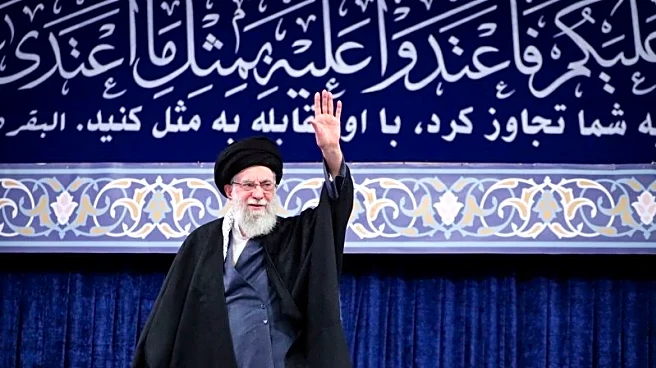
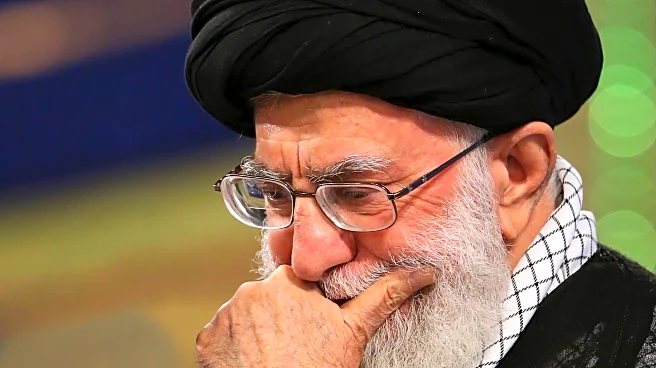
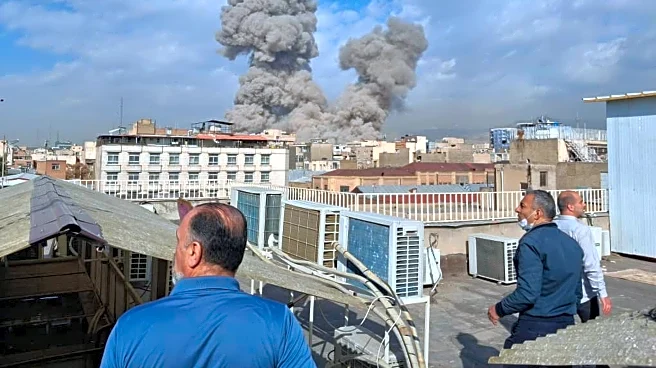
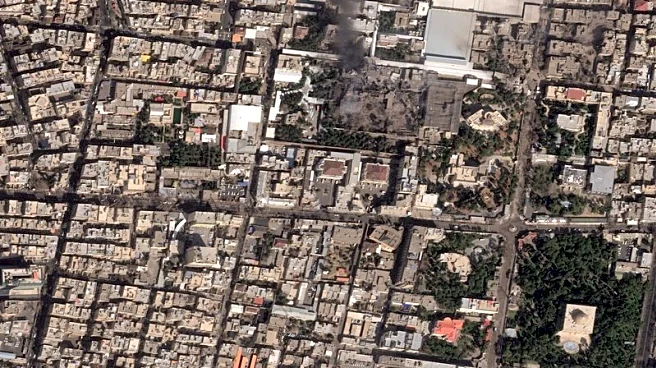
Iran has formed a temporary leadership council following the assassination of Supreme Leader Ayatollah Ali Khamenei. The council, as outlined in Iran's constitution, includes the country's sitting president, judiciary chief, and a member of the Guardian
Council. This interim body will govern until the Assembly of Experts selects a new supreme leader. The Assembly, consisting of 88 Shiite clerics, is tasked with choosing a successor as soon as possible. The assassination of Khamenei, who held power for nearly 37 years, has initiated a complex succession process. Potential candidates for the position include Khamenei's son, Mojtaba, although he has never held government office. The transition is unprecedented, with only one previous transfer of power in the office of supreme leader since Iran's 1979 Islamic Revolution.
Why It's Important?
The assassination of Ayatollah Ali Khamenei and the subsequent formation of a temporary leadership council mark a significant moment in Iran's political landscape. The supreme leader holds vast powers, including final say over all state matters and command of the military and the Islamic Revolutionary Guard Corps. The transition process could impact Iran's domestic and foreign policies, especially given the country's recent tensions with the U.S. and Israel. The selection of a new leader may influence Iran's approach to international relations and its nuclear program. Additionally, the potential candidacy of Khamenei's son could provoke public dissent, challenging the legitimacy of clerical rule and possibly leading to political instability.
What's Next?
The Assembly of Experts is expected to convene soon to select a new supreme leader. The process may involve behind-the-scenes deliberations and political maneuvering, with various factions vying for influence. The outcome could affect Iran's future direction, particularly in terms of its stance towards the West and regional alliances. Observers will be watching for signs of internal conflict or shifts in policy as the new leadership takes shape. The international community, including the U.S., may respond to these developments with diplomatic or strategic adjustments, depending on the new leader's policies and approach.
Beyond the Headlines
The succession process in Iran highlights the complexities of its political system, where religious and political authority are intertwined. The potential for a father-to-son transfer of power raises questions about the nature of leadership in a theocratic state and the balance between tradition and modern governance. This transition may also influence Iran's socio-political dynamics, as public sentiment towards clerical rule and governance could shift. The broader implications for regional stability and international relations are significant, given Iran's strategic position and influence in the Middle East.