





What's Happening?
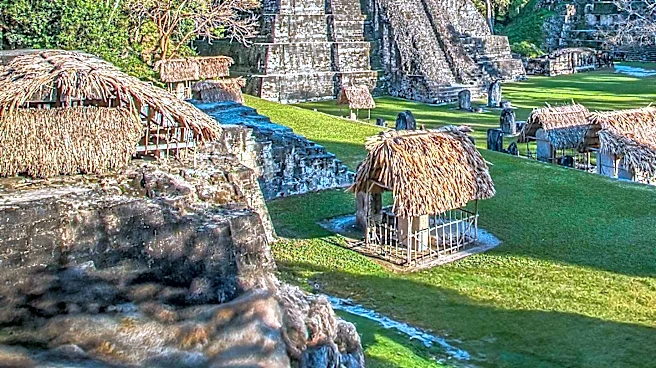
A recent study analyzing sediment cores from Lago Cobá and Cenote Xcach in Mexico’s Yucatán Peninsula has revealed that lakes near ancient Maya settlements were polluted with toxic levels of mercury for centuries during the Classic Maya period (approximately
250 to 920 CE). Researchers found that mercury concentrations repeatedly exceeded modern sediment-toxicity thresholds, with levels at Cenote Xcach reaching up to 18 micrograms per gram around 720 CE, significantly higher than the 2 micrograms per gram associated with severe biological effects. This mercury contamination led to major disruptions in the lakes’ food webs, evidenced by sharp declines in pigments associated with algae and bacteria, and the disappearance or dramatic changes in populations of ostracods, freshwater snails, and midge larvae. The study suggests that the mercury originated from cinnabar, a mercury sulfide mineral used by the Maya as a pigment in burials, pottery, and buildings, which was then deposited on the landscape and washed into the lakes through soil erosion.
Why It's Important?
This discovery adds a critical dimension to the understanding of environmental challenges faced by Classic Maya societies. While drought, deforestation, soil erosion, and declining water availability were already documented stressors, the new evidence indicates that the available water itself became hazardous due to human activity. This highlights how ancient civilizations, despite their technological and cultural achievements, could inadvertently create significant environmental pollution with long-lasting impacts. The study suggests potential chronic mercury exposure for Maya residents through contaminated drinking water and aquatic foods, although direct measurements in ancient human remains were not part of this research. This finding underscores the complex interplay between human resource use, environmental degradation, and societal well-being in historical contexts, offering lessons for contemporary environmental management.
What's Next?
Future research may focus on directly assessing mercury levels in ancient Maya human remains to determine the extent of health impacts on the population. Further investigations could also explore the presence and concentration of methylmercury, a particularly toxic form that can accumulate in food webs, within these ancient lake sediments. Understanding the full scope of mercury’s impact on the Maya could involve broader studies across more sites in the Yucatán Peninsula to determine if this was a localized issue or a more widespread environmental problem. Additionally, researchers might delve deeper into the trade networks that supplied cinnabar to the Maya lowlands to better understand the economic and cultural drivers behind its extensive use and subsequent environmental consequences.
Beyond the Headlines
The findings offer a compelling case study of anthropogenic environmental impact predating the industrial era, challenging the notion that widespread pollution is a solely modern phenomenon. It reveals that even materials valued for their aesthetic or ritualistic properties, like cinnabar, could have severe ecological and potential health consequences when used extensively. This historical precedent provides a valuable perspective on the long-term environmental legacy of human actions and the often-unforeseen consequences of resource utilization. The study also implicitly raises ethical questions about the balance between cultural practices and environmental stewardship, demonstrating that such dilemmas are not unique to contemporary society but have roots in ancient civilizations.