








What's Happening?
Representatives Kweisi Mfume (D-MD-07), Wesley Bell (D-MO-01), and Marilyn Strickland (D-WA-10), along with over 70 Democratic House colleagues, have sent a letter to Department of Defense Secretary Pete Hegseth and Acting Navy Secretary Hung Cao. The
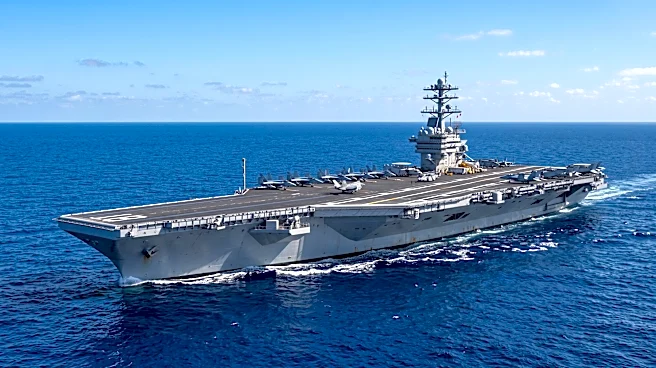
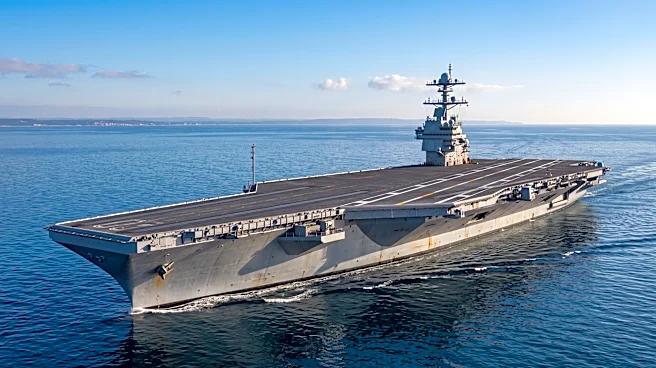
letter urges them to maintain the name of the USS Doris Miller, following reports that the U.S. Navy is considering renaming the aircraft carrier (CVN-81) in honor of President Trump. The lawmakers argue that renaming the ship after a sitting president would be unprecedented and would diminish the recognition of Doris Miller, a World War II hero who displayed extraordinary bravery during the attack on Pearl Harbor. Miller, a Mess Attendant Third Class, took control of an anti-aircraft gun and assisted wounded sailors, becoming the first African American and enlisted sailor to have an aircraft carrier named after him. The representatives emphasize that the decision to name CVN-81 after Miller was made during President Trump's first term, and reversing it would be a significant step backward in honoring military service.
Why It's Important?
This congressional effort highlights a significant debate over military honors, historical recognition, and political tradition within the U.S. Navy. The potential renaming of the USS Doris Miller carries substantial symbolic weight, particularly concerning racial representation and the recognition of heroism. Doris Miller's story is a powerful testament to courage and service, especially given the context of segregation during his time in the Navy. Changing the ship's name would not only erase a historic tribute to an African American war hero but also set a precedent for naming naval vessels after sitting presidents, a practice the lawmakers deem unprecedented and politically motivated. This issue resonates deeply within military communities, civil rights organizations, and the broader public, as it touches upon national values, historical memory, and the integrity of military honors. The outcome could influence future decisions regarding the naming of U.S. naval assets and the criteria used to honor individuals.
What's Next?
The Department of Defense and the Acting Navy Secretary will need to respond to the letter from the congressional representatives. Their decision will determine whether the USS Doris Miller retains its name or is renamed. This issue could escalate into a broader public and political debate, potentially drawing in more lawmakers, veterans' groups, and civil rights advocates. The representatives, particularly Congressman Mfume, have also introduced legislation to further honor Doris Miller, including bills to posthumously award him the Medal of Honor and the Congressional Gold Medal. These legislative efforts could gain renewed attention and support depending on the Navy's decision regarding the ship's name. The situation will likely continue to be closely watched by those concerned with military traditions, historical recognition, and the representation of diverse heroes within the U.S. Armed Forces.
Beyond the Headlines
The controversy surrounding the USS Doris Miller's name delves into deeper questions about how national heroes are chosen and commemorated, and the role of political influence in these decisions. It underscores the ongoing struggle for equitable recognition of contributions from all segments of American society, particularly those from marginalized communities. The act of naming a naval vessel is not merely administrative; it is a powerful symbolic gesture that shapes national identity and historical narratives. A decision to rename the ship could be perceived as a disregard for the sacrifices of individuals like Doris Miller and a politicization of military honors, potentially eroding public trust and morale within the armed forces. Conversely, upholding the name would reinforce the importance of honoring diverse heroes and maintaining established traditions, sending a message about the enduring values of courage and service regardless of background. This debate highlights the tension between political expediency and the preservation of historical integrity.