





What's Happening?
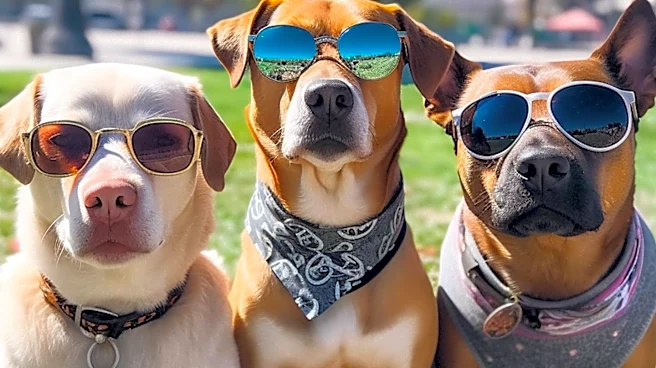
Dog parks are increasingly recognized as vital 'third places' in U.S. urban environments, serving as public venues that facilitate regular, voluntary, and informal social gatherings beyond home and work. Sociologist Ray Oldenburg defined these spaces
as crucial for fostering accidental encounters and community bonds, a role traditionally filled by main streets, neighborhood pubs, and general stores. The rapid growth of off-leash dog parks in U.S. city park systems over the past two decades has been linked to higher social capital and neighborhood cohesion among users, according to a study in the Journal of Urban Affairs. These parks provide a setting where individuals from diverse backgrounds can interact, sharing a common interest in their pets, which acts as a social lubricant. This dynamic contrasts sharply with the selective homogeneity often found on social media platforms, where algorithms tend to sort people into like-minded groups, potentially exacerbating intolerance and mistrust. The interactions in dog parks, characterized by repeated, low-stakes, in-person contact, are seen as an antidote to the isolation and divisions fueled by online environments.
Why It's Important?
The resurgence and recognition of dog parks as 'third places' hold significant importance for U.S. society by addressing growing concerns about social isolation and declining community cohesion. In an era dominated by digital interactions, these physical spaces offer a crucial counterbalance, promoting face-to-face engagement that can build empathy and trust among diverse populations. Research indicates that contact between different groups generally reduces prejudice, and the informal nature of dog park interactions allows individuals to connect on a personal level, moving beyond superficial opinions to appreciate shared humanity. This is particularly vital in mitigating the polarizing effects of social media, which often reinforces existing biases. By fostering environments where people with differing views can interact regularly, dog parks contribute to a healthier social fabric, potentially leading to more tolerant and understanding communities. The investment in and promotion of such public spaces can therefore be seen as a strategic approach to improving public health and social well-being across the nation.
What's Next?
The continued growth and strategic development of dog parks and similar 'third places' are likely to be a focus for urban planners and community developers in the U.S. As the benefits of these spaces become more widely understood, there may be increased investment in creating and maintaining such amenities within city park systems. Local governments and community organizations could explore initiatives to further enhance the social functions of these parks, perhaps through organized events or community programs that encourage broader participation. Additionally, the success of dog parks in fostering social capital might inspire the creation of other types of 'third places' tailored to different interests, aiming to replicate the positive social dynamics observed. There could also be a growing emphasis on integrating these social infrastructure elements into broader urban planning strategies, recognizing their role in building resilient and inclusive communities. The ongoing challenge will be to ensure equitable access to these spaces across all neighborhoods, allowing a wider segment of the population to benefit from their community-building potential.
Beyond the Headlines
The phenomenon of dog parks as 'third places' highlights a deeper societal need for authentic, in-person social interaction in an increasingly digital world. This trend underscores a fundamental human desire for community and belonging that cannot be fully satisfied by online platforms. The success of dog parks suggests that shared activities, even simple ones like walking a dog, can serve as powerful catalysts for social bonding, transcending demographic and ideological divides. This has profound implications for understanding the limitations of purely algorithmic social connections and the enduring value of physical spaces in shaping human behavior and societal norms. The 'social lubricant' effect of dogs in these environments points to the potential for other shared interests or activities to facilitate similar connections. Ultimately, the resurgence of 'third places' like dog parks reflects a broader cultural shift towards re-prioritizing local, tangible community engagement as a means to combat isolation and foster a more empathetic and cohesive society.