





What's Happening?
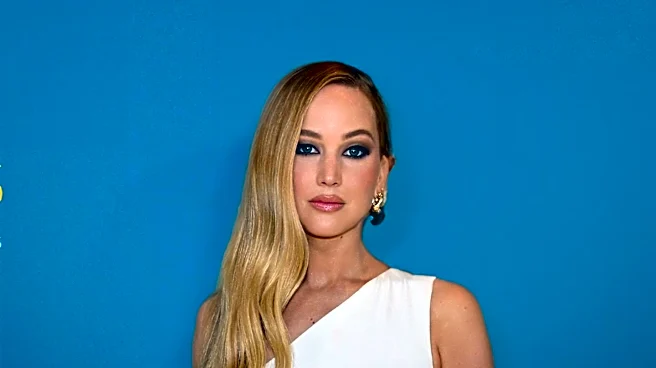
Online searches frequently link British actress Florence Pugh and American real estate entrepreneur Igor Olenicoff, leading to speculation about a possible relationship or connection. However, based on publicly available information, there is no verified
evidence of a romantic relationship, family tie, or significant professional partnership between the two individuals. Pugh is renowned for her acting career, with notable roles in films like 'Midsommar,' 'Little Women,' and 'Oppenheimer.' Olenicoff, on the other hand, is the founder of Olen Properties, a privately held real estate company based in Newport Beach, California, with a substantial portfolio of commercial and residential properties across multiple U.S. states. Their professional fields, personal histories, and public profiles are distinctly separate, with Pugh primarily in entertainment and Olenicoff in real estate and investment.
Why It's Important?
The frequent pairing of Florence Pugh and Igor Olenicoff in online searches highlights a broader issue of how information is consumed and interpreted in the digital age. It underscores the potential for search algorithms or keyword associations to create perceived connections between unrelated public figures, leading to misinformation or unverified claims. For the public, it emphasizes the importance of critical evaluation of online search results and distinguishing between speculative content and fact-based reporting. For public figures, it illustrates the challenges of managing their public image and personal narratives in an environment where unconfirmed associations can quickly gain traction. This phenomenon can impact their privacy and the public's understanding of their actual achievements and relationships.
What's Next?
As online search behaviors continue to evolve, similar instances of unrelated public figures being linked due to keyword associations are likely to persist. For individuals like Pugh and Olenicoff, managing their public narratives will remain crucial. This may involve continued public statements or simply allowing their distinct professional and personal paths to speak for themselves. Media outlets and content creators will also face an ongoing responsibility to verify information and avoid perpetuating unconfirmed connections. The broader trend suggests a need for increased digital literacy among consumers to discern credible information from speculative content, especially when dealing with search results that combine disparate individuals.
Beyond the Headlines
This situation delves into the ethical implications of information dissemination in the digital age. The ease with which two unrelated individuals can be linked through search queries raises questions about the responsibility of search engines and content platforms in presenting accurate information. It also touches upon the psychological aspect of how people construct narratives based on fragmented online data, often seeking connections where none exist. The case of Pugh and Olenicoff serves as a micro-example of how 'fake news' or unverified claims can originate from seemingly innocuous search patterns, potentially impacting reputations and public perception without any malicious intent. It underscores the ongoing challenge of maintaining factual integrity in an increasingly interconnected and algorithm-driven information landscape.