




What's Happening?
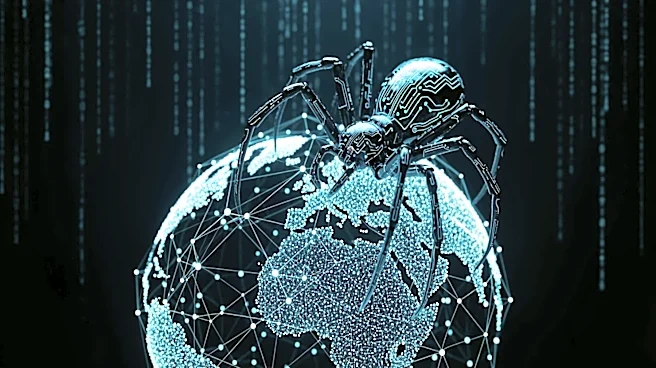
Researchers from the University of Toronto have developed a prototype of a computer worm powered by an AI agent capable of self-replication across a simulated network. This AI-driven worm utilizes a free large language model (LLM) to autonomously identify
and exploit vulnerabilities and misconfigurations in enterprise environments. The worm can hijack computing power from devices such as laptops and cameras, and propagate itself to servers and networks to either steal data or launch further attacks. The research highlights the potential for AI to be used in offensive cyberattacks without the need for the most advanced AI models.
Why It's Important?
The development of an AI-driven worm underscores the growing threat of AI in cybercrime, as it demonstrates how even less powerful AI models can be harnessed for malicious purposes. This poses significant risks to enterprise networks, which may not be adequately prepared to defend against such sophisticated attacks. The ability of the worm to exploit common vulnerabilities and misconfigurations highlights the need for improved cybersecurity measures and awareness. Organizations may need to reassess their security protocols and invest in more robust defenses to protect against AI-enhanced cyber threats.
What's Next?
As AI technology continues to advance, it is likely that similar threats will become more prevalent. Organizations may need to collaborate with cybersecurity experts to develop new strategies and technologies to detect and mitigate AI-driven attacks. Additionally, there may be increased pressure on policymakers to establish regulations and guidelines for the ethical use of AI in cybersecurity. The research community may also focus on developing AI tools that can counteract such threats and enhance network security.
Beyond the Headlines
The ethical implications of using AI for offensive cyberattacks are significant, as it raises questions about the responsibility of researchers and developers in preventing the misuse of AI technology. There is also a cultural dimension to consider, as the increasing sophistication of cyberattacks may lead to a shift in how organizations and individuals perceive and prioritize cybersecurity. Long-term, this development could drive innovation in AI-driven defense mechanisms and foster a new era of cybersecurity solutions.