


What's Happening?
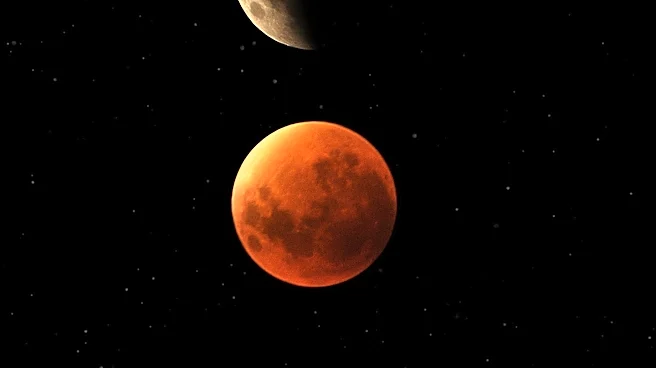
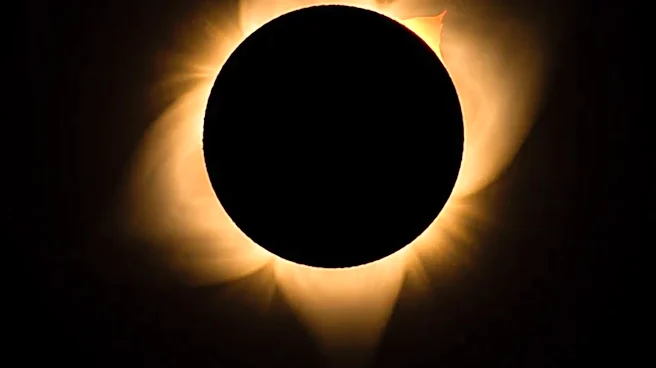
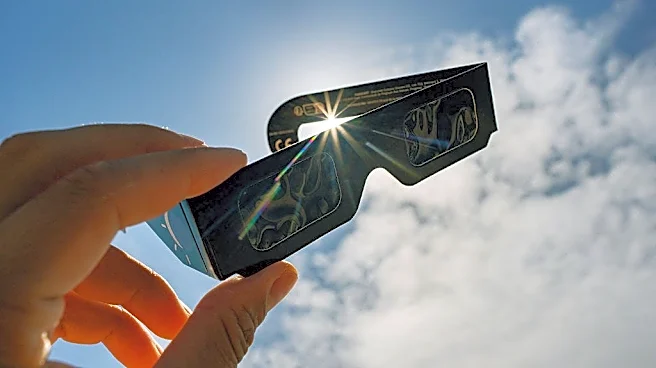
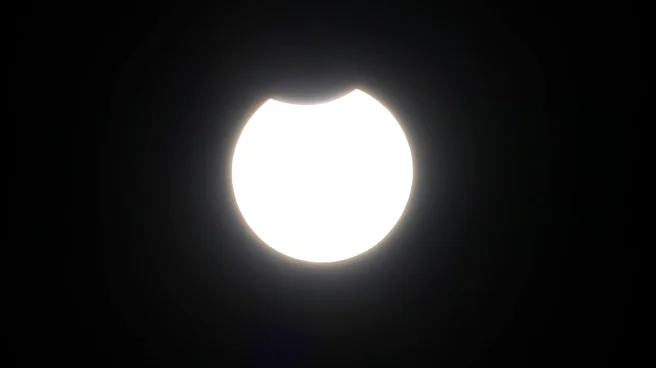
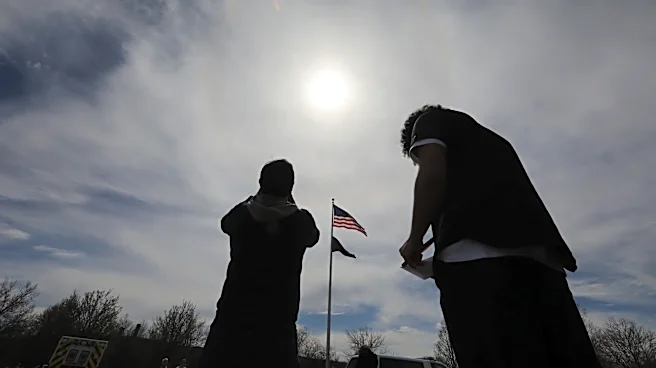
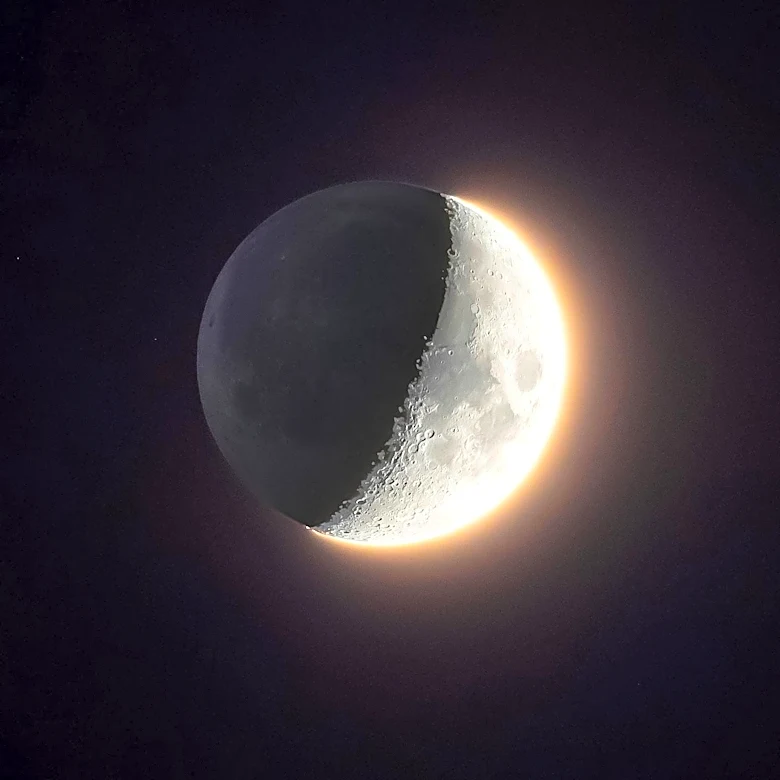
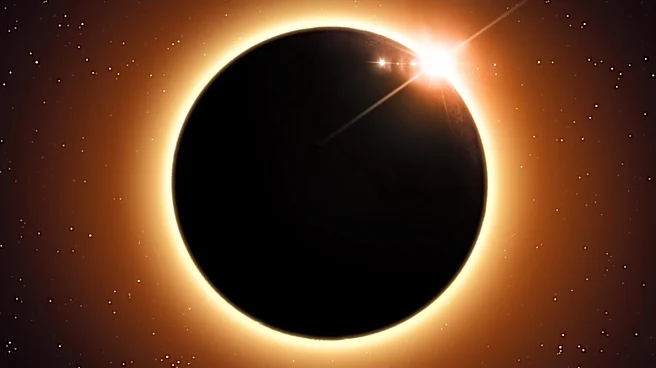
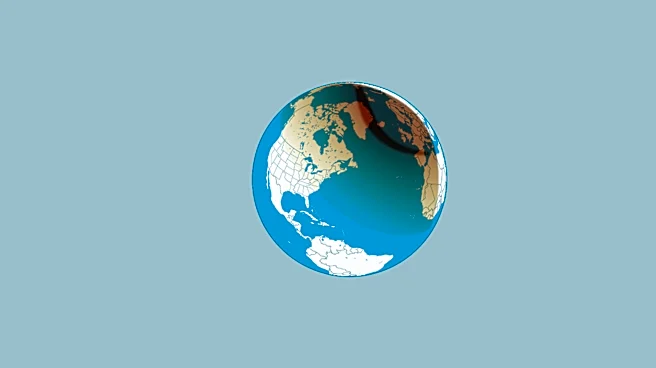
On August 12, 2026, a total solar eclipse was observed in Spain, marking a significant astronomical event as it was the first such eclipse in the region since 1912. The event attracted attention from various cultural and political figures, including President
Trump, who humorously engaged with the event on social media. Antonio Banderas and Brian May were among the celebrities who shared their experiences of the eclipse. Banderas watched the eclipse from Málaga with his partner, while May observed it from the Javalambre Observatory in Teruel. The eclipse was part of a series of astronomical events that will continue through 2028, drawing global interest and coverage, including a broadcast by NASA.
Why It's Important?
The solar eclipse not only captivated the public and celebrities but also highlighted the intersection of science, culture, and politics. President Trump's engagement with the event underscores the role of social media in shaping public discourse around scientific phenomena. The widespread interest in the eclipse reflects a growing public fascination with astronomy and the natural world, potentially inspiring educational and scientific pursuits. The event also served as a platform for international cultural exchange, with figures like Brian May using their influence to promote scientific curiosity.
What's Next?
The eclipse is the first in a series of three that will occur over the next few years, with the next ones expected in 2027 and 2028. These events are likely to continue drawing significant public and media attention, potentially influencing educational initiatives and public interest in astronomy. Stakeholders in science and education may leverage this interest to promote STEM fields and increase public engagement with scientific research.